CBI – «Hump Pilot»
The China–Burma–India (CBI) Theater was one of the most challenging and strategically significant theaters of WWII. After the Japanese occupation of Burma in 1942 severed the Burma Road, the only practical means of supplying Allied forces in China was by air over the eastern Himalayas along the route known as «The Hump». Flown primarily by the U.S. Army Air Forces Air Transport Command, these missions departed from airfields in eastern India and crossed mountain ranges where surrounding peaks exceeded 25'000 feet, with transport aircraft routinely operating between 15'000 and 20'000 feet in extreme weather, severe icing, violent turbulence, and with only limited navigational aids. Flying C-46 Commandos, C-47 Skytrains, and later C-54 Skymasters, American aircrews delivered more than 650'000 tons of cargo to China during the war. The operation cost approximately 600 aircraft and more than 1'000 American airmen, while the wreckage of numerous crashed transports scattered across the Himalayan mountains earned the route the enduring nickname «The Aluminum Trail». Despite these losses, the Hump airlift became one of the greatest logistical and aviation achievements of WWII.
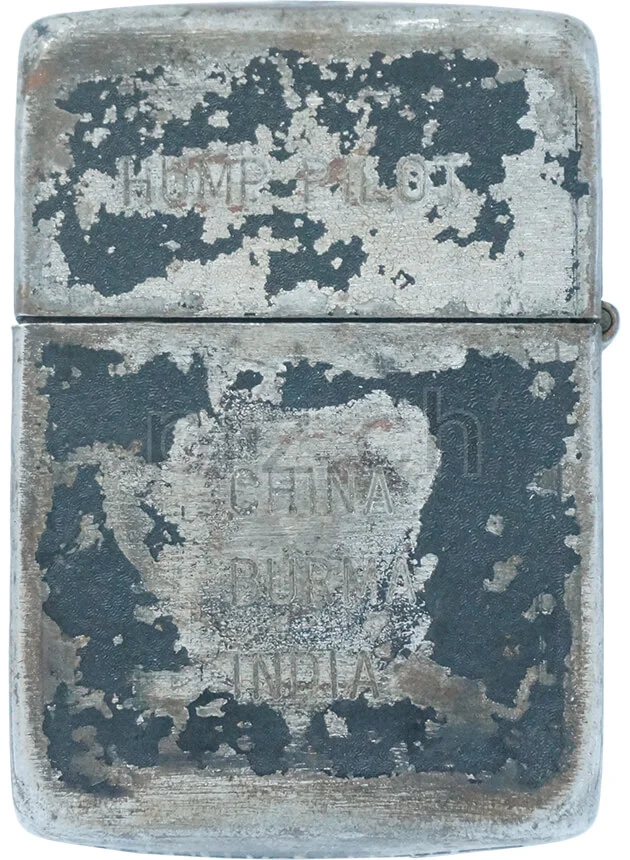
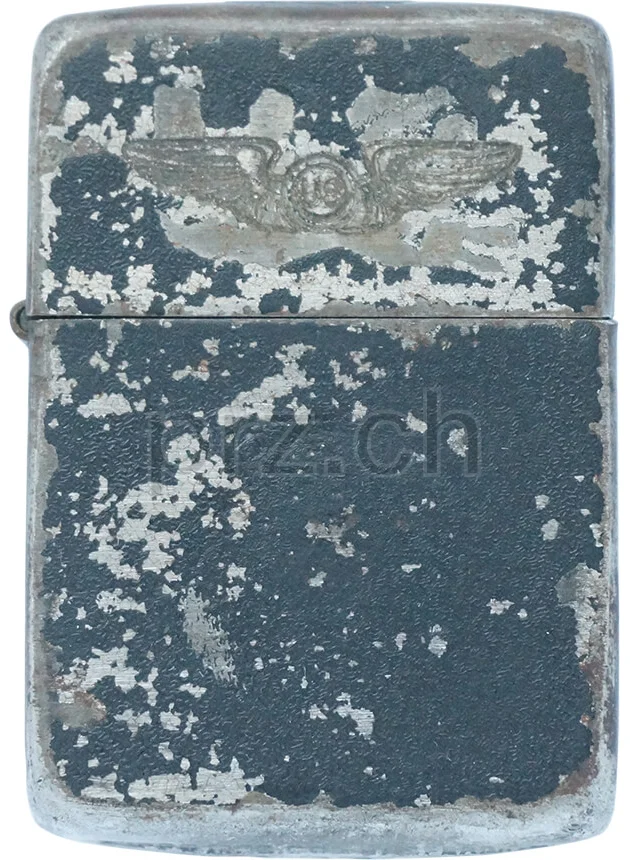
Zippo factory engraved on the front with the U.S. Army Air Forces winged insignia on the lid, while the body remains plain. The reverse is engraved «HUMP PILOT» on the lid above the stacked theater designation «CHINA – BURMA – INDIA».
- Model:
three barrel hinge, round bottom
- Year:
1943 - 45
- Status:
in collection