U.S. Maritime Service – 44
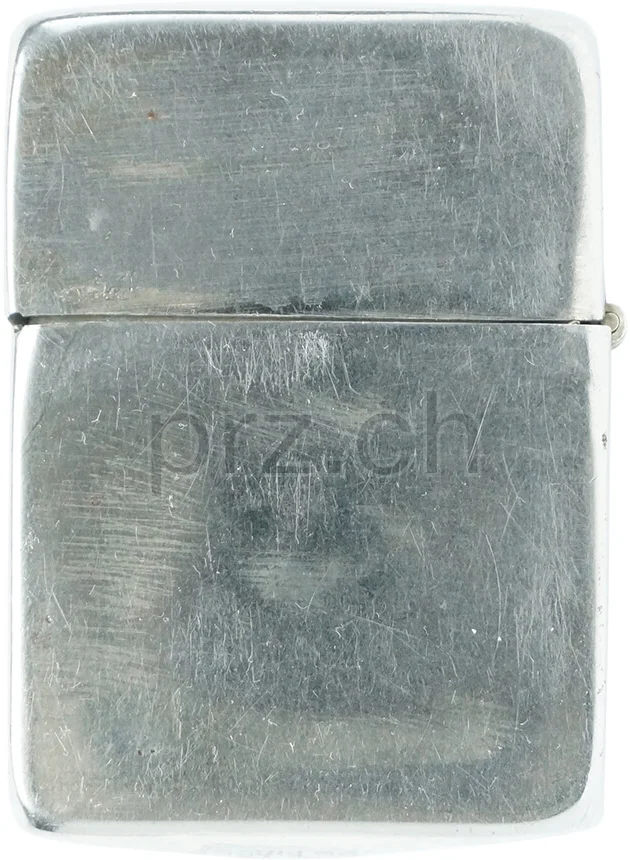
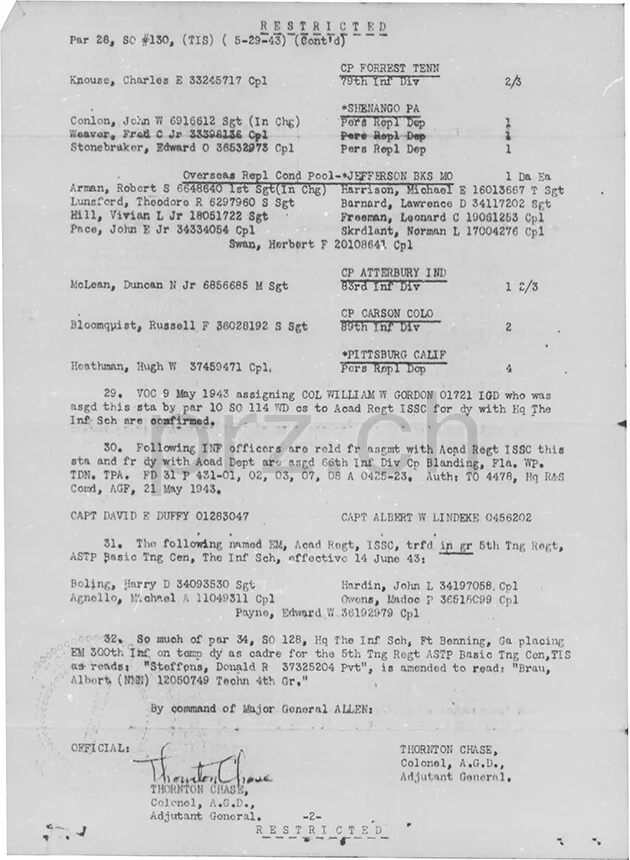
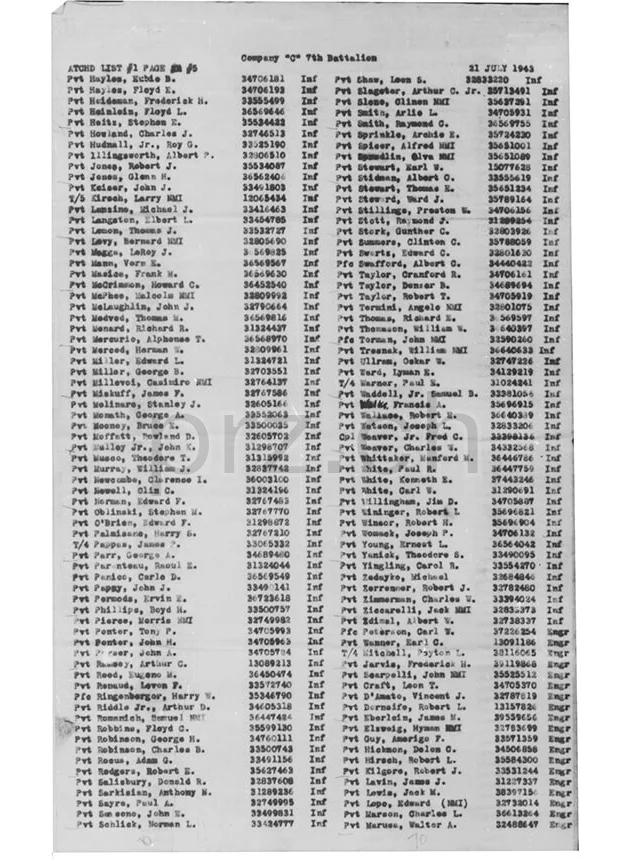
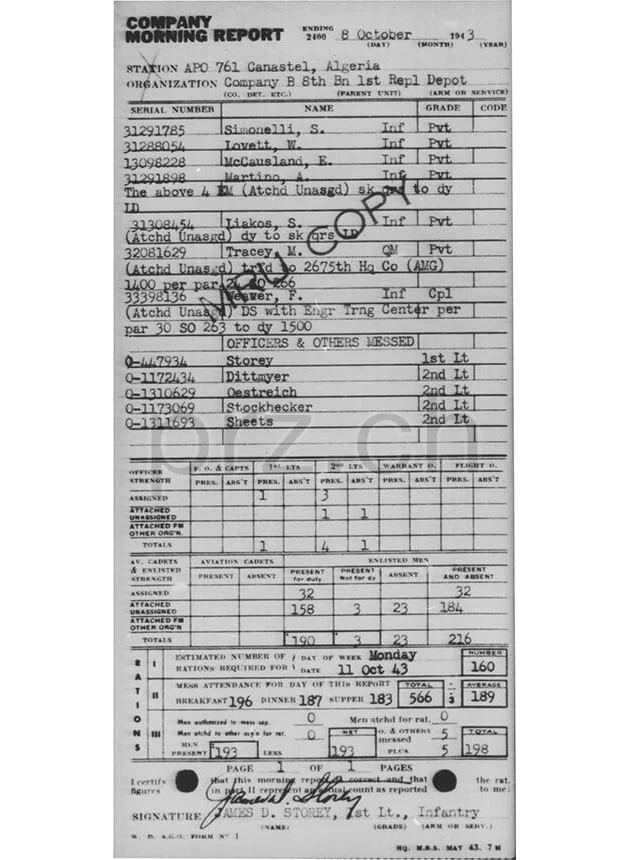
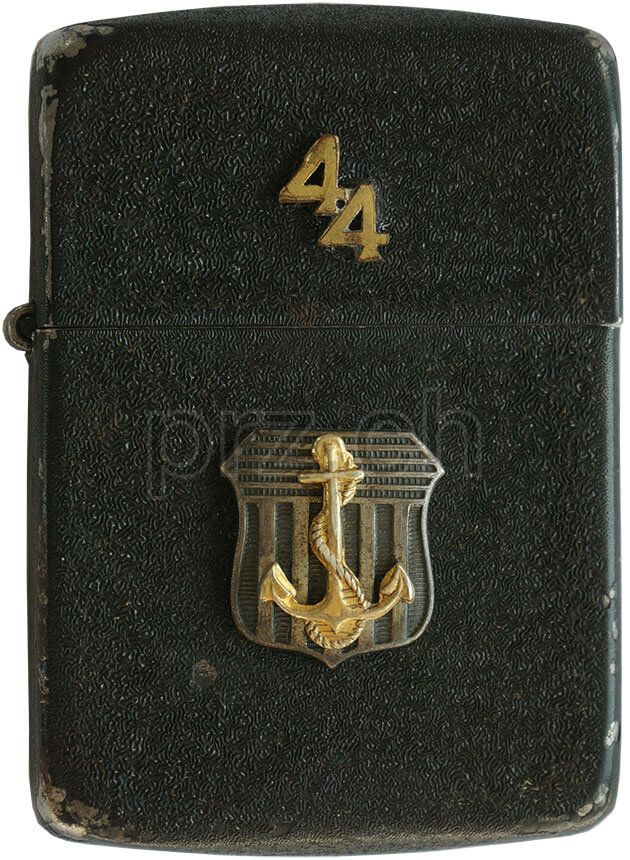
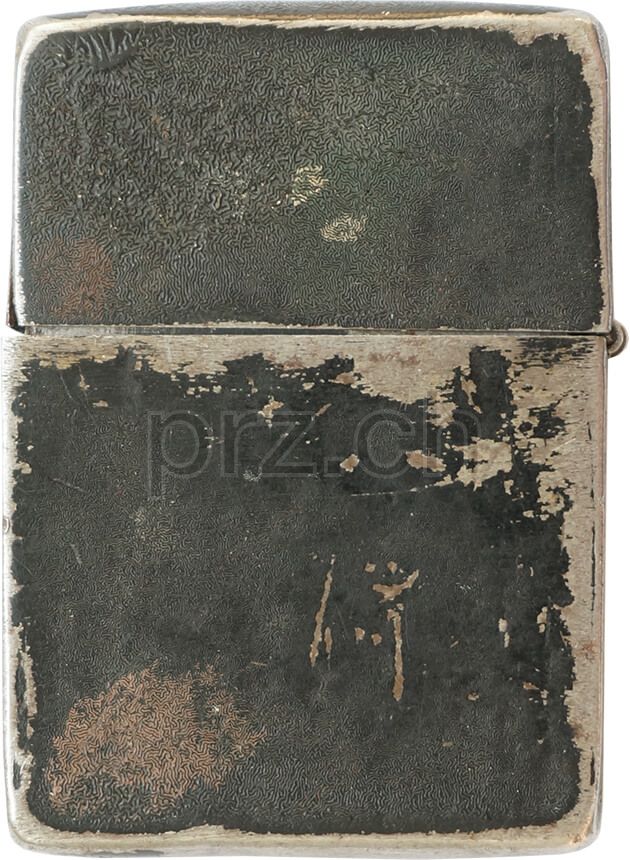
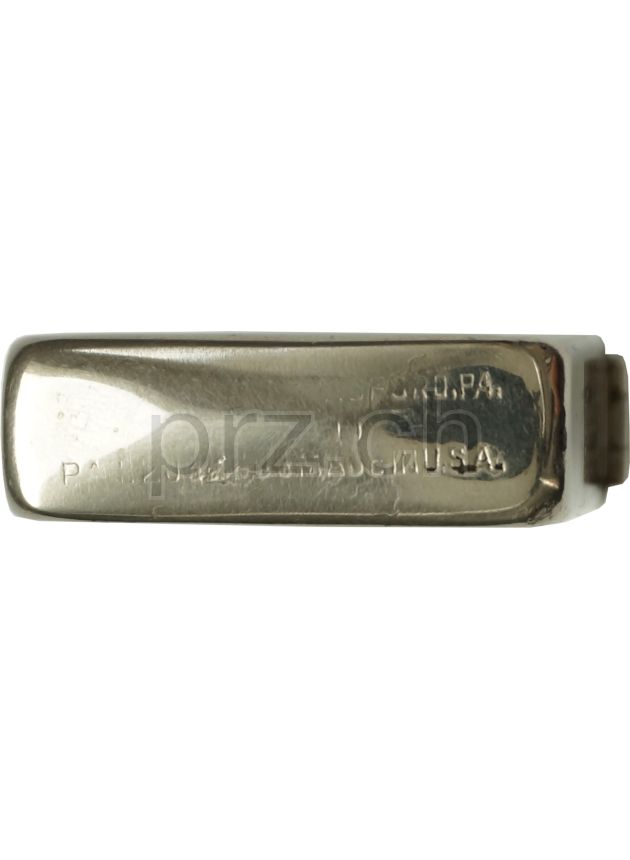
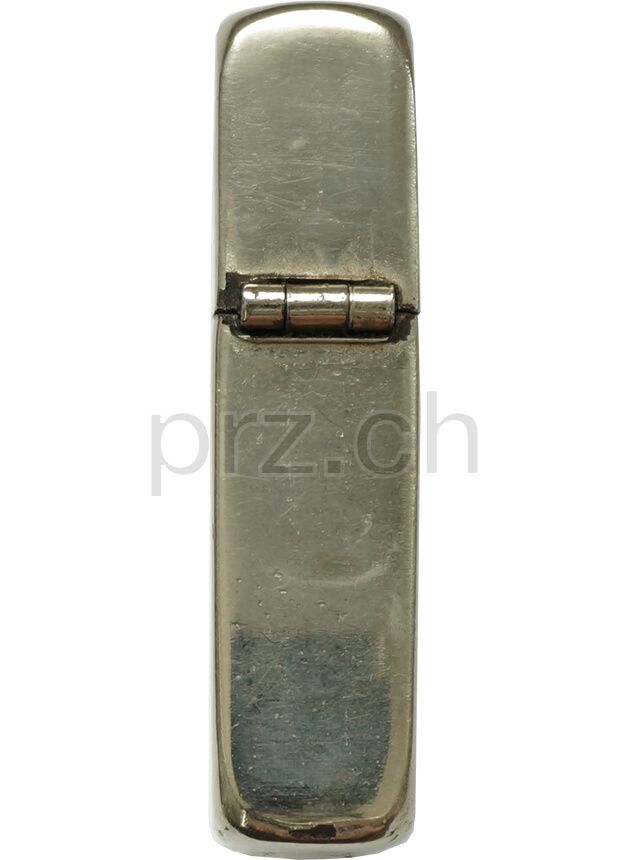
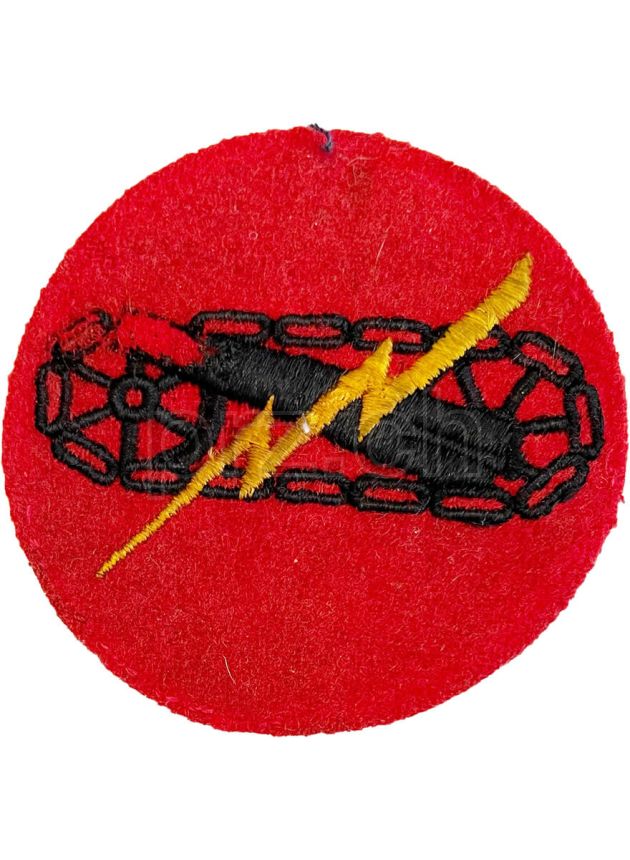
Black crackle Zippo with the insignia of the U.S. Maritime service and the applied number 44 on the front.
- Model:
three barrel hinge, round bottom
- Year:
1943 - 45
- Status:
in collection
Black crackle Zippo with the insignia of the U.S. Maritime service and the applied number 44 on the front.
three barrel hinge, round bottom
1943 - 45
in collection
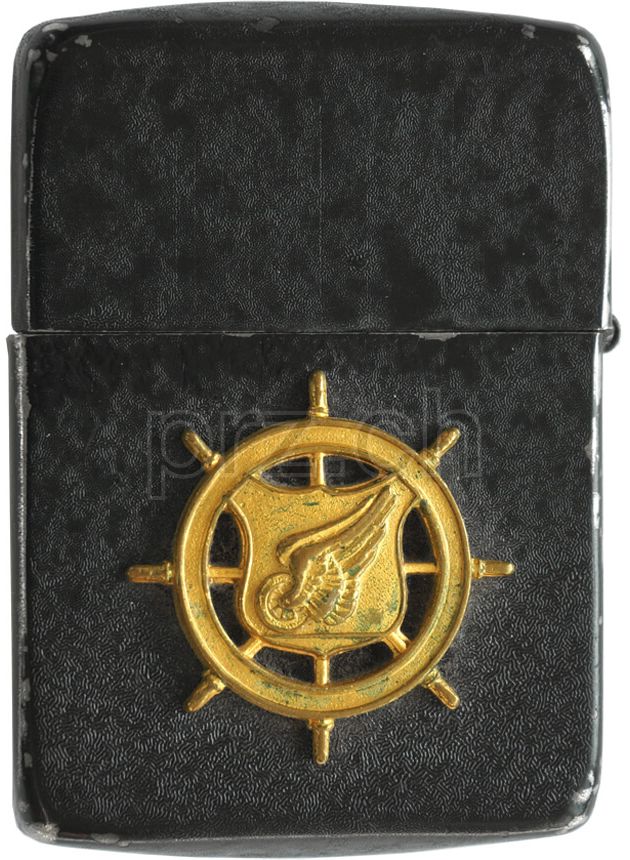
The U.S. Transportation Corps is a combat service support branch of the U.S. Army. It is also one of three U.S. Army Logistics Branches, the others being the U.S. Quartermaster Corps and the U.S. Ordnance Corps. The U.S. Transportation Corps is responsible for the movement of personnel and material by truck, rail, air, and sea. Its motto is «Spearhead of Logistics». One of the greatest feats of the U.S. Transportation Corps, via the Military Railway Service, was the rebuilding of France's shattered railroad network after D-Day and the transportation of 1,500 locomotives and 20,000 railway cars.
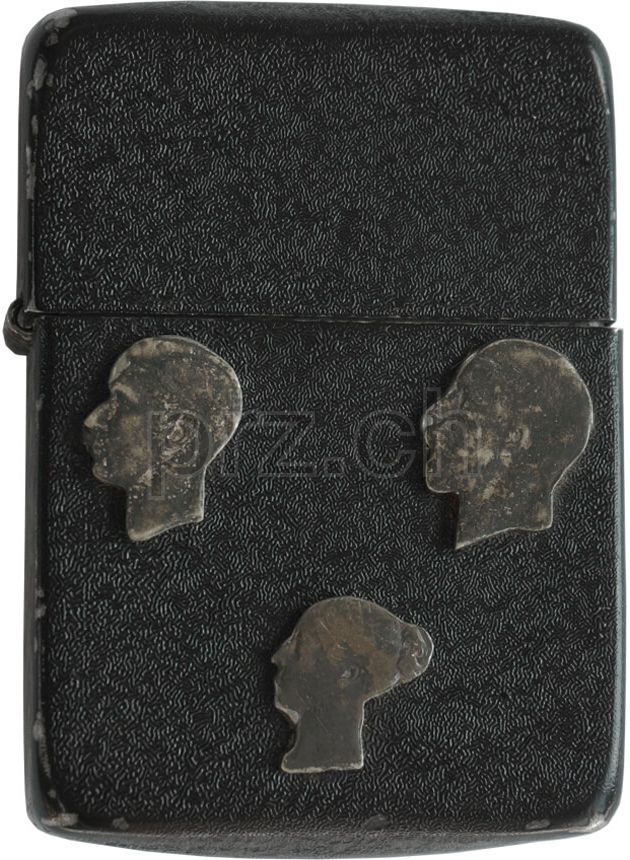
Worn black crackle Zippo with U.S. Transportation Corps insignia on the front and with three cut-out heads of coins on the other side.
three barrel hinge, round bottom
1943 - 45
in collection
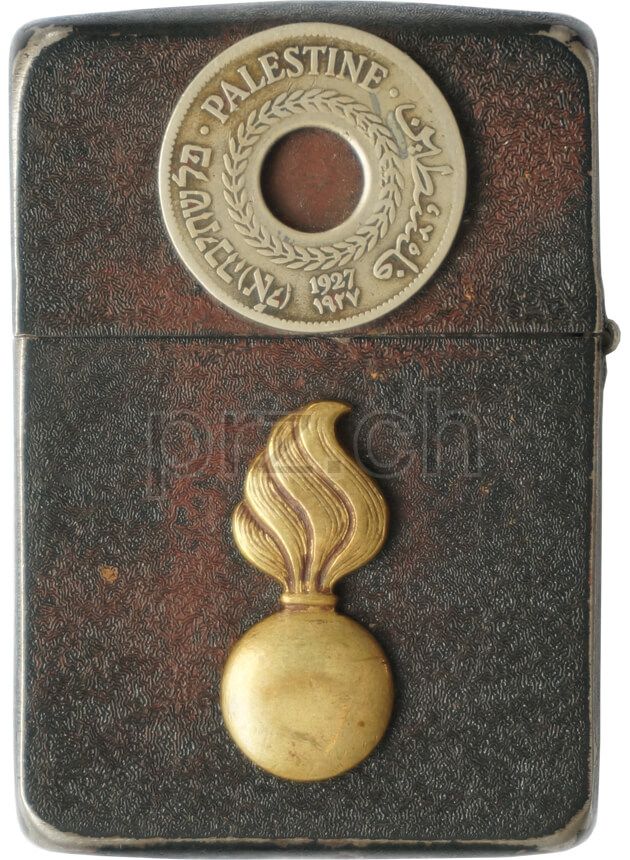
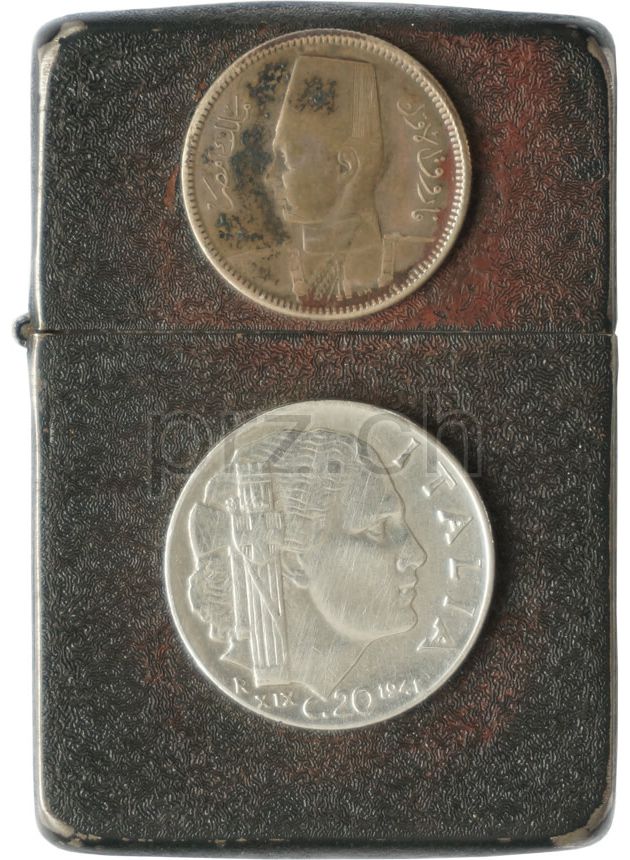
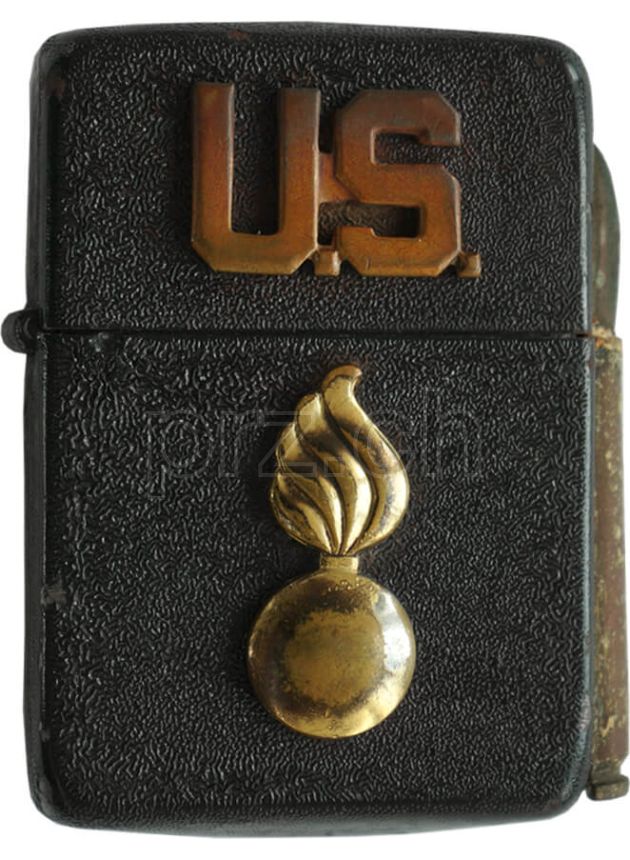
Black crackle Zippo with U.S. Army Ordnance Corps insignia and a Palestine 5 Mils 1927 on the front and an Egyptian coin along with an Italian 20 Cents 1941 coin on the back.
four barrel hinge, flat bottom
1942 - 43
in collection
The United States take over the North Atlantic air route – the shortest path between America and the European front. As way stations on this route both Greenland and Newfoundland acquired a new importance, as one of the terminal points.
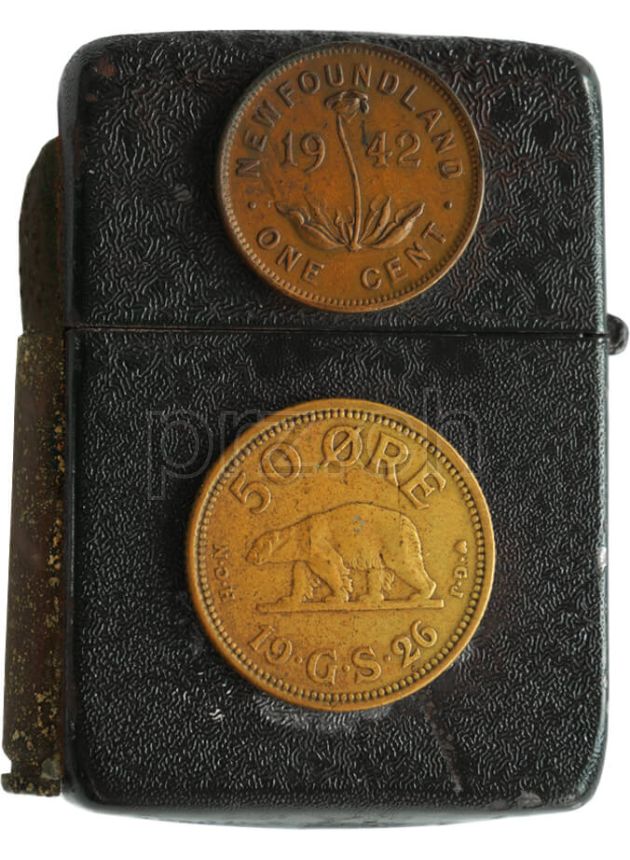
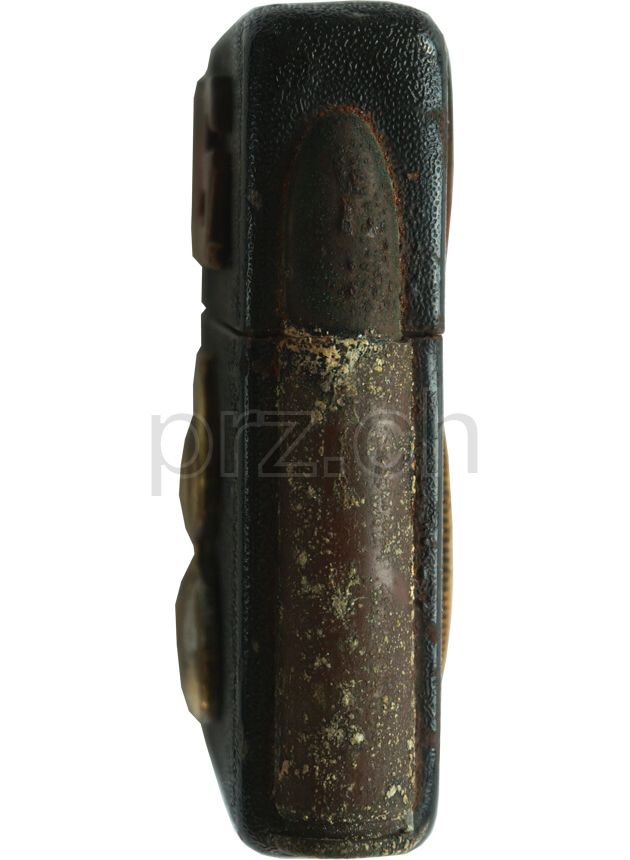
Black crackle Zippo with a U.S. Army officers collar insignia and a U.S. Army Ordnance Corps insignia on the front, a Newfoundland One Cent 1942 coin and a Greenland 50 Øre 1926 coin on the back, and an applique of a half .30 M1 carbine cartridge and bullet on the side.
three barrel hinge, round bottom
1943 - 45
in collection
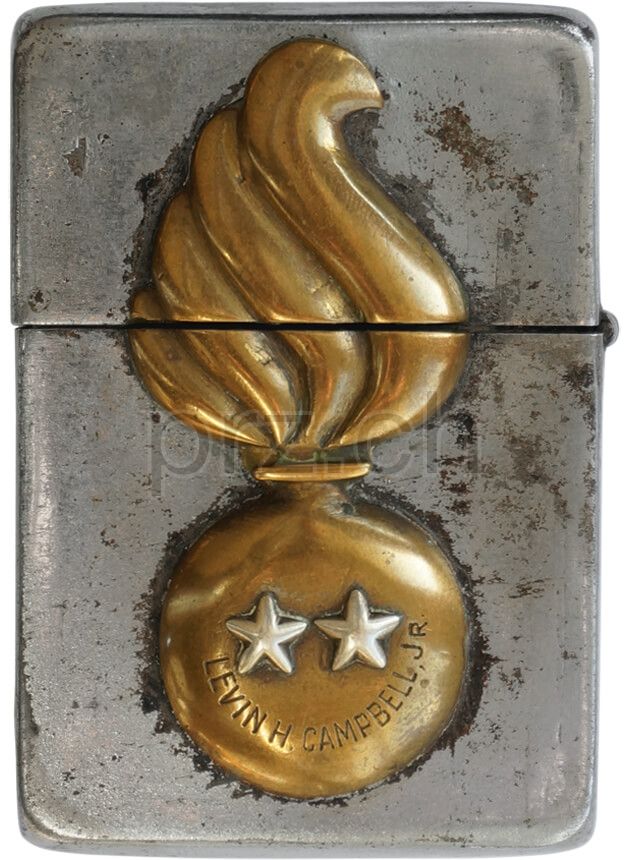
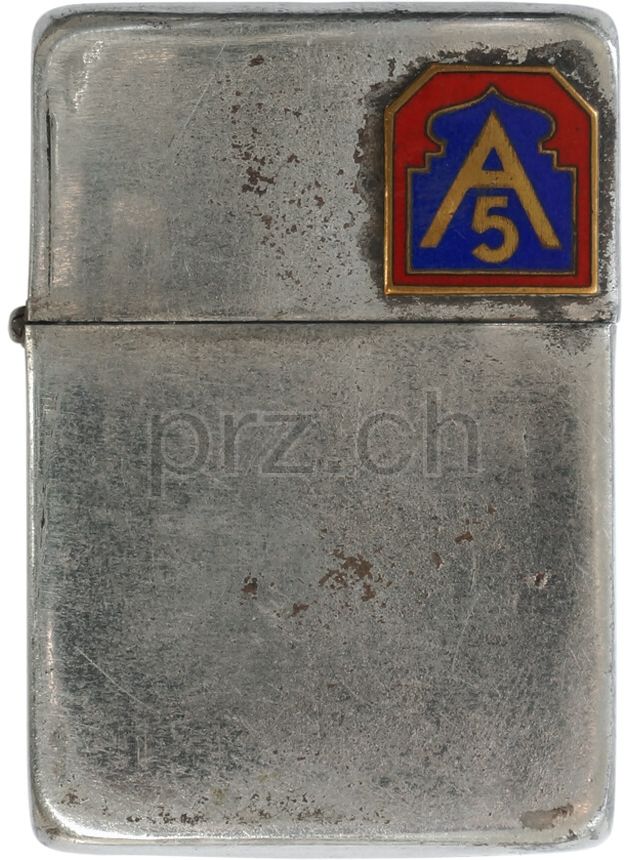
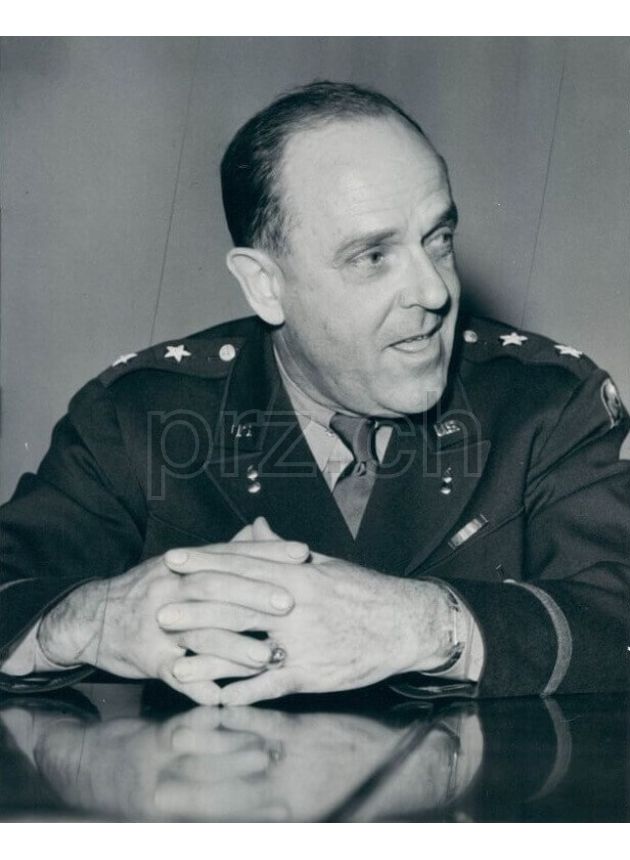
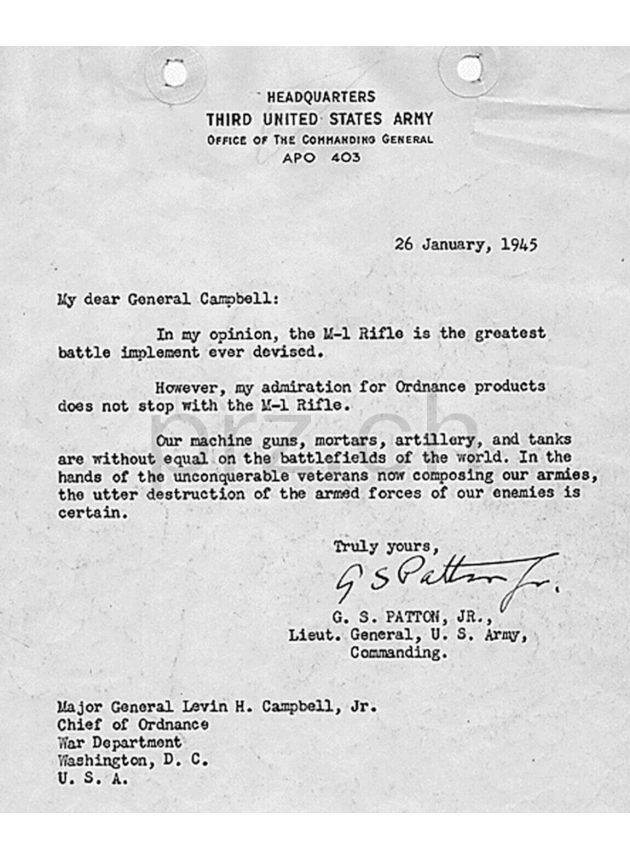
Multiple awarded Levin H. Campbell Jr. (03104) was the 16th chief of ordnance during WWII from 1942 until 1946 in the rank of a major general and temporary as a lieutenant general. His optimizations and major changes to the ordnance corps were war deciding. A letter from General Patton sums up his accomplishments. Patton said that his «admiration for Ordnance products does not stop with the M-1 Rifle.» He goes on to say that the «machine guns, mortars, artillery, and tanks of the United States are without equal».
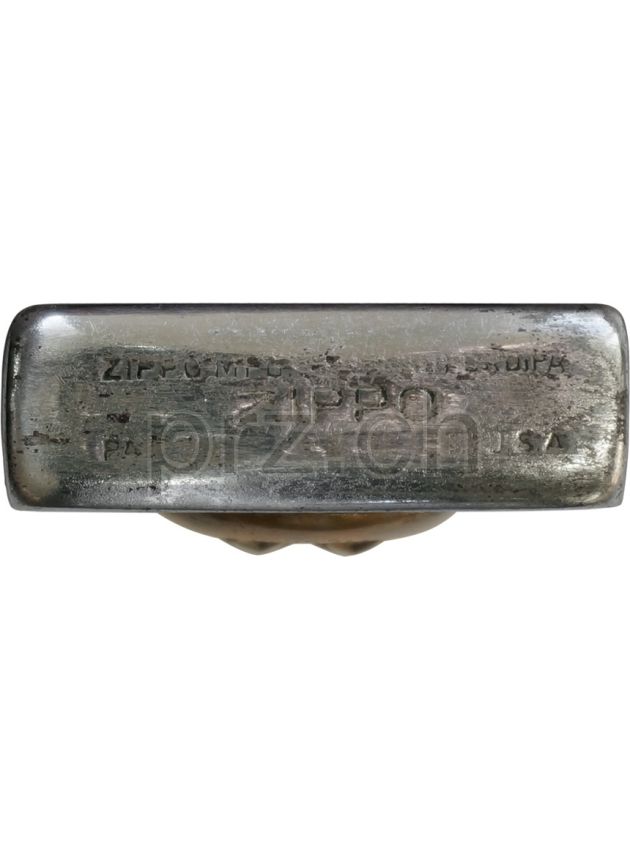
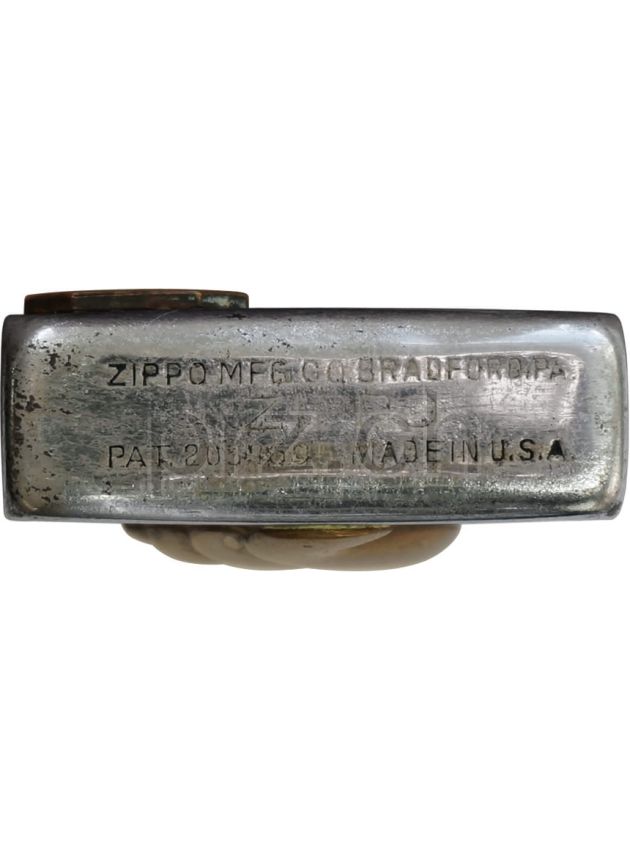
Chrome plated Zippo with the unit insignia of the U.S. Fifth Army on one side and the U.S. Army Ordnance Corp insignia flaming bomb with two sterling rank stars applied and the owner's name «Levin H. Campbell Jr.» engraved on the other side. Double stamp on the top and the bottom.
four barrel hinge, flat bottom
1942 - 43
in collection
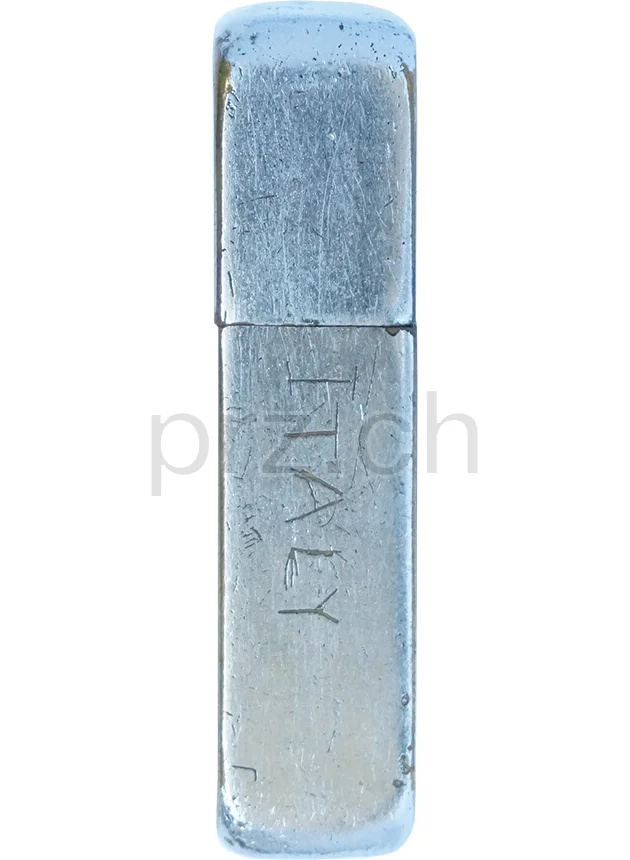
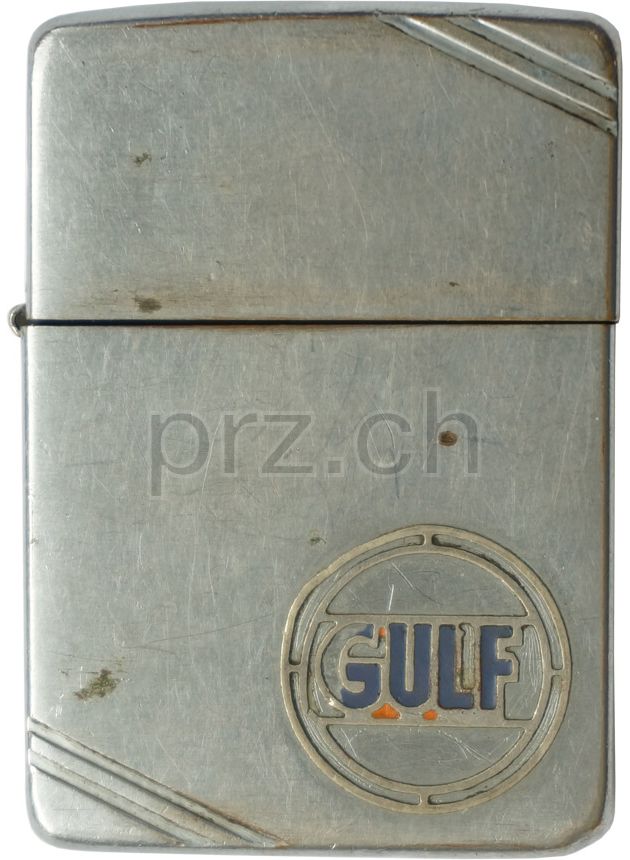
Without oil WWII could never have been won. Gulf Oil was a major global oil company and the eighth-largest American manufacturing company in 1941.
Worn Zippo with diagonal lines and original manufacturing Gulf metal emblem on the front.
four barrel hinge, flat bottom
1937 - 41
in collection
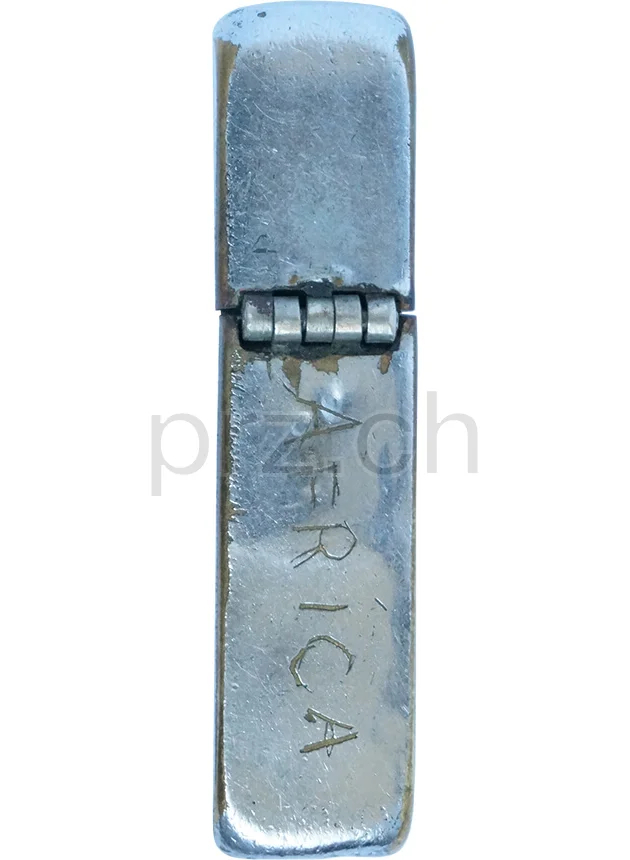
Well worn black crackle Zippo with U.S. Army Corps of Engineers insignia on the front.
four barrel hinge, flat bottom
1942 - 43
in collection
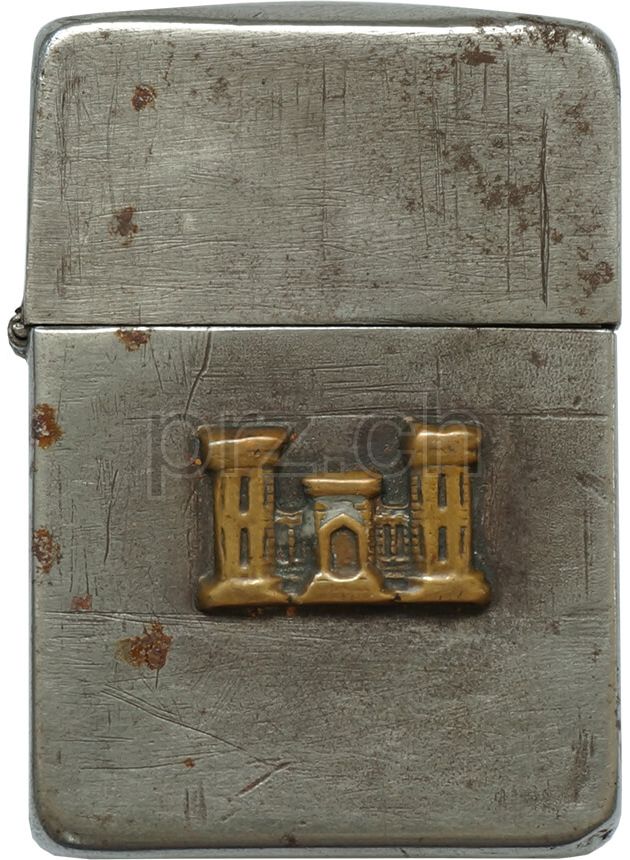
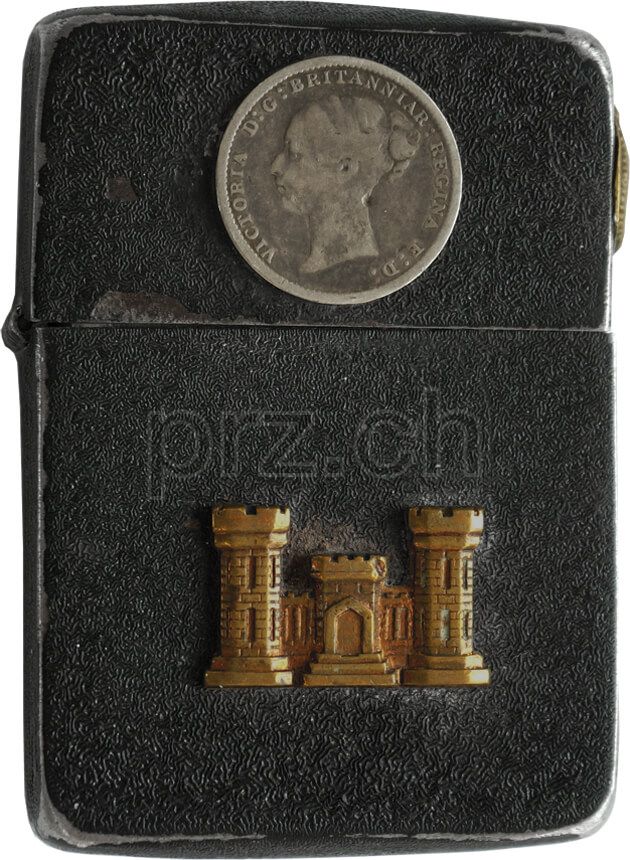
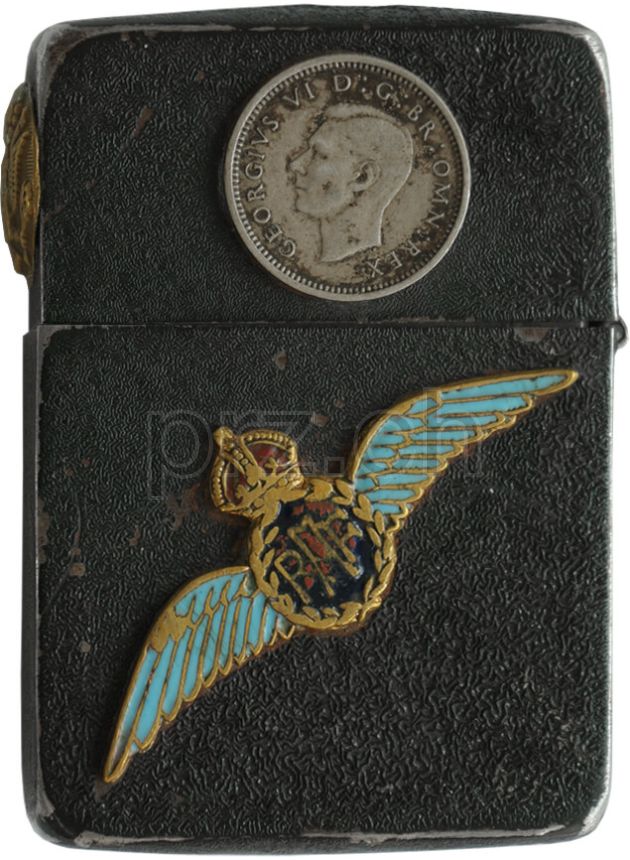
Army engineers built airfields, roads, bridges, ports, military camps, hospitals, and dozens of other facilities, including the Pentagon completed in 1942. Among the most acclaimed of the combat engineers' achievements were the Alcan Highway, the Ledo and Burma Roads and the clearing of mines and underwater obstacles. The U.S. Army Corps of Engineers supervised the Manhattan Project, the construction of the atomic bomb.
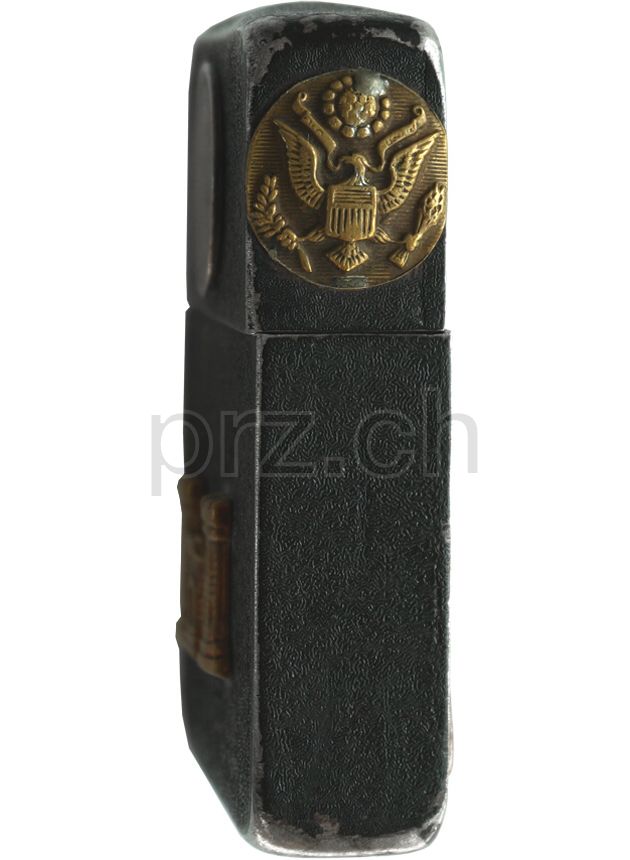
Black crackle Zippo with a U.S. Army Corps of Engineers insignia, a Royal Air Force insignia and a small British coin on both the front and back as well as a small U.S. Army Great Seal insignia on the side.
four barrel hinge, flat bottom
1942 - 43
in collection
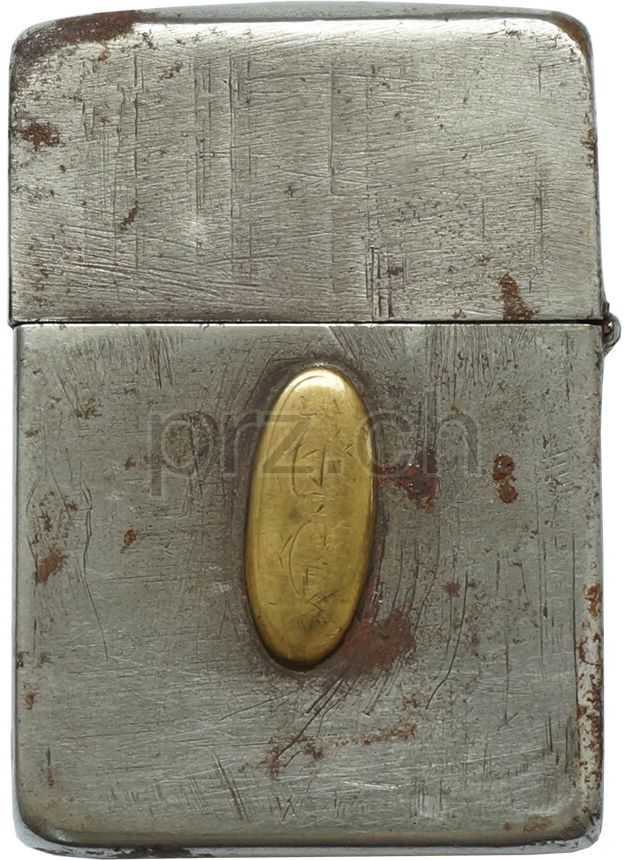
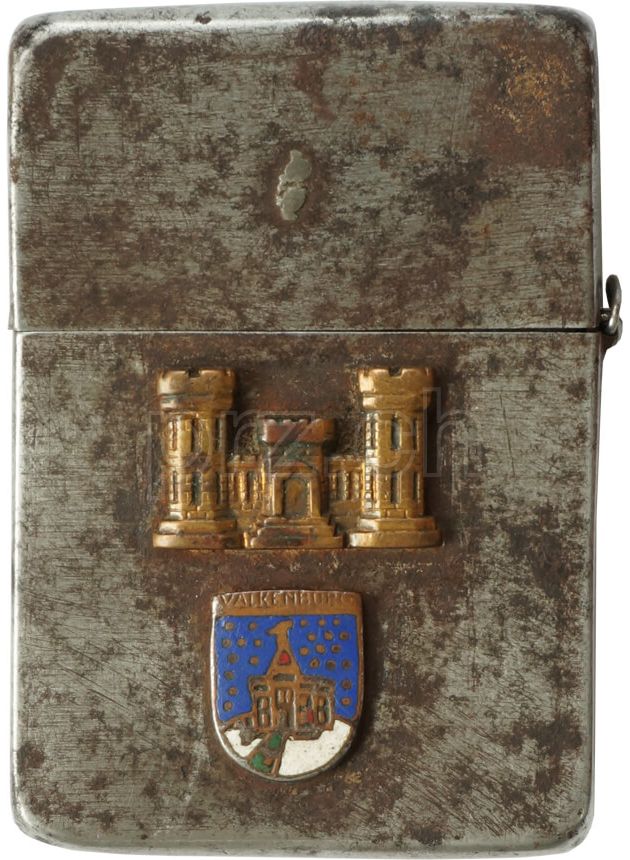
The 30th Infantry Division landed at Omaha Beach, France on 10 June 1944. With them came their Divisional Engineers, the 105th Engineer Combat Battalion. One notable campaign in which the 105th Engineer Combat Battalion participated was Operation Market Garden. Among others the batallion took part in September in the liberation of the Valkenburg in the Netherlands.
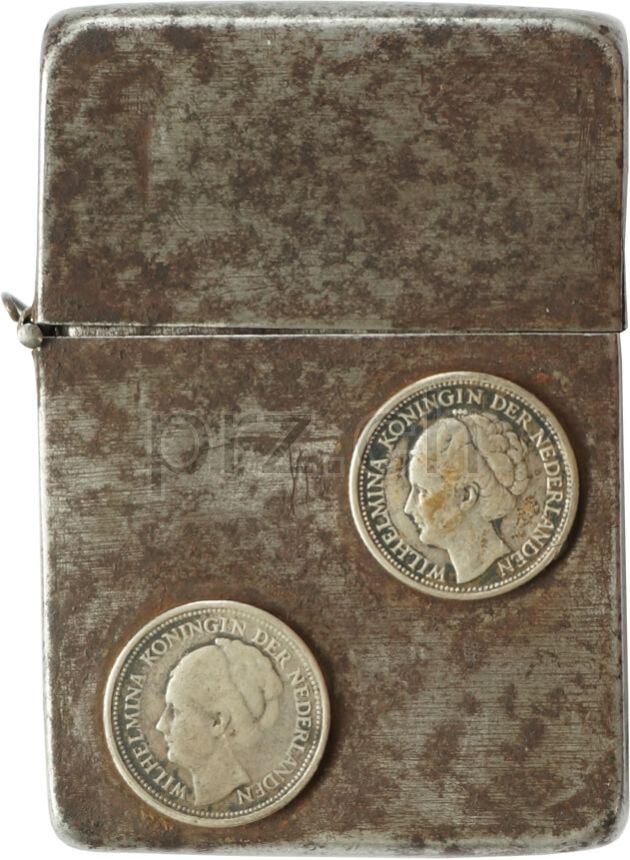
Well worn black crackle Zippo with U.S. Army Corps of Engineers insignia and a coat of arms of the Valkenburg on the front and two Netherland coins with the image of Queen Wilhelmina. In 1941 the Germans seized all the silver and copper coins. This was on the one hand because the old coins bore the image of Queen Wilhelmina, on the other hand the metal was used for the German arms industry. The people had to hand in their old coins in exchange for new zinc coins or paper money. However, many people kept their old coins and as a symbol of resistance and as a reminder of the royal family.
four barrel hinge, flat bottom
1942 - 43
in collection
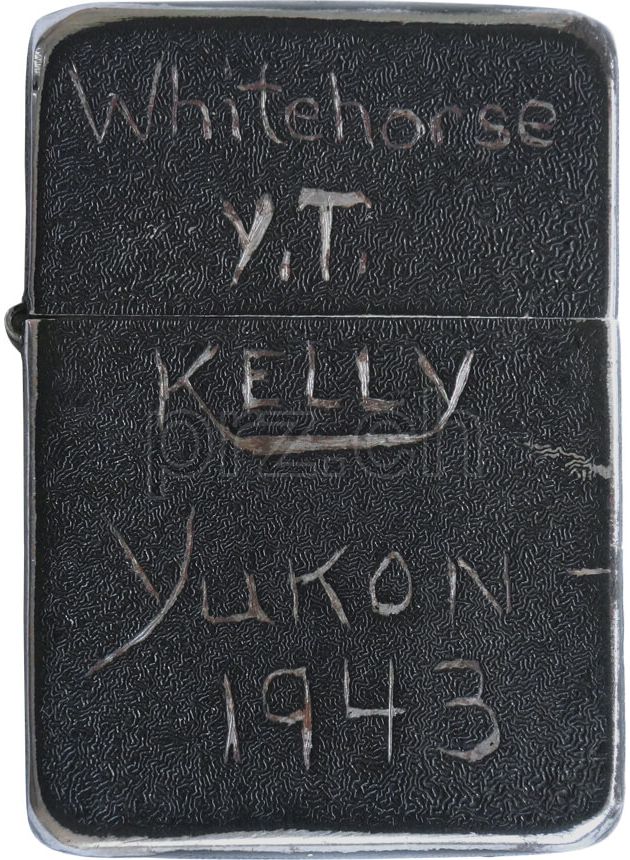
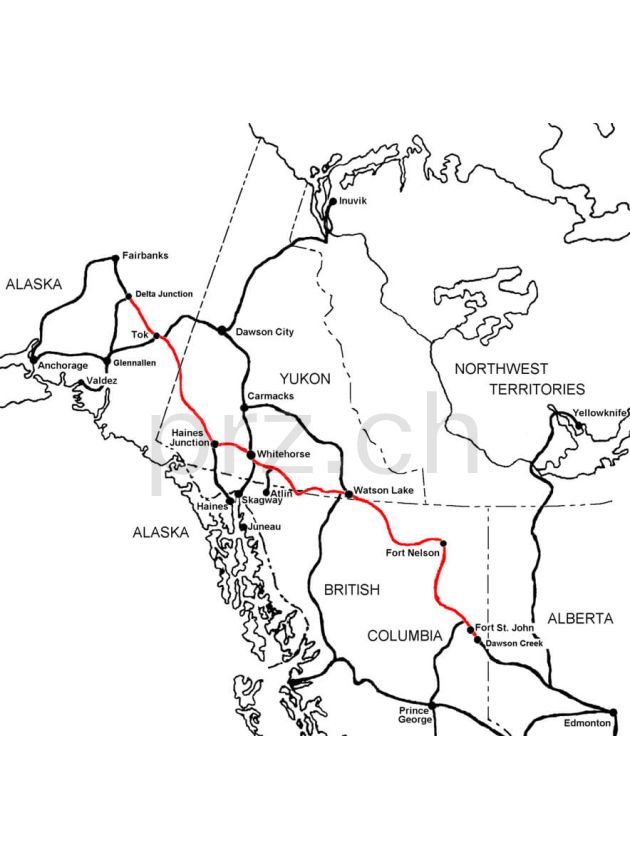
ALCAN Highway also known as the Alaska Highway was constructed during WWII to connect the contiguous United States to Alaska across Canada. It begins at the junction with several Canadian highways in Dawson Creek, British Columbia, and runs to Delta Junction, Alaska, via Whitehorse, Yukon. When it was completed in 1942, it was about 2,700 kilometers long. Y. T. Kelly served 1943 as a safety engineer in the corps.
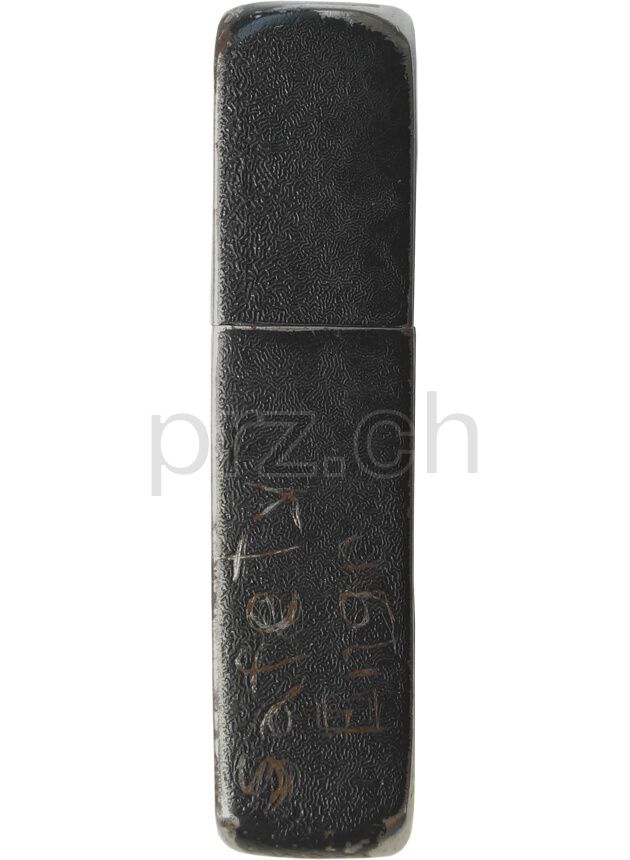
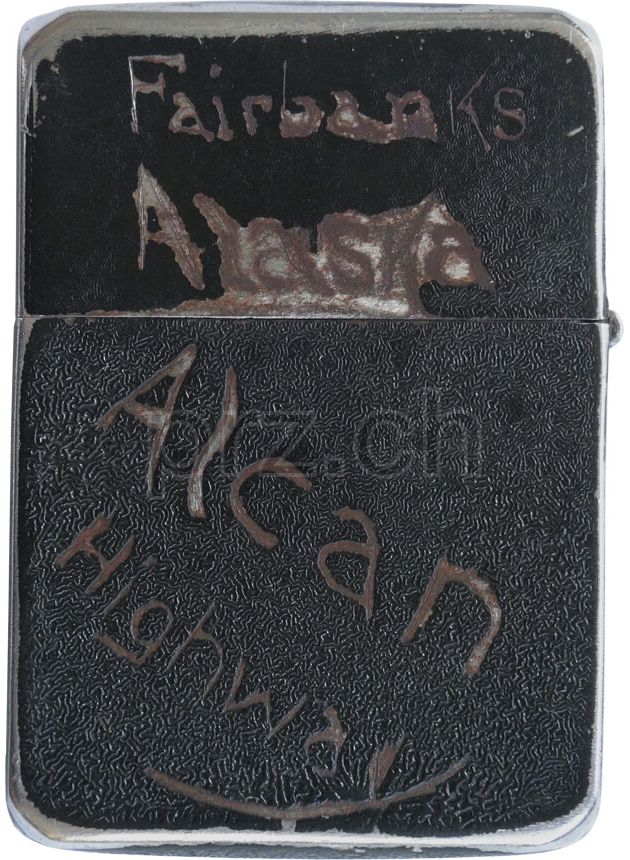
Worn black crackle Zippo with different engravings: «Whitehorse», the owner's name «Y. T. Kelly», «Yukon» and «1943» on the front, «Fairbanks Alaska» and «Alcan Highway» on the back and «Safety Engr.» on the side.
four barrel hinge, flat bottom
1942 - 43
in collection
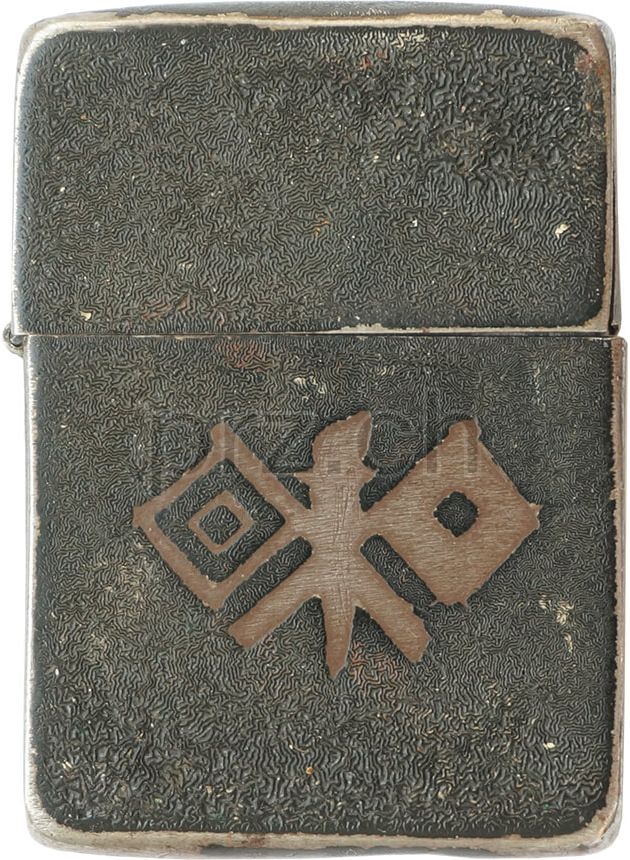
Worn black crackle Zippo with engraving of the U.S. Army Signal Corps insignia on the front.
four barrel hinge, flat bottom
1942 - 43
in collection
Well worn black crackle Zippo with U.S. Signal Corps insignia and womens name «Tamara» on one side and «Eddie M. Cain» together with «Italia 44-45» engraved on the other side with a U.S. Army officers collar insignia.
three barrel hinge, round bottom
1943 - 45
in collection
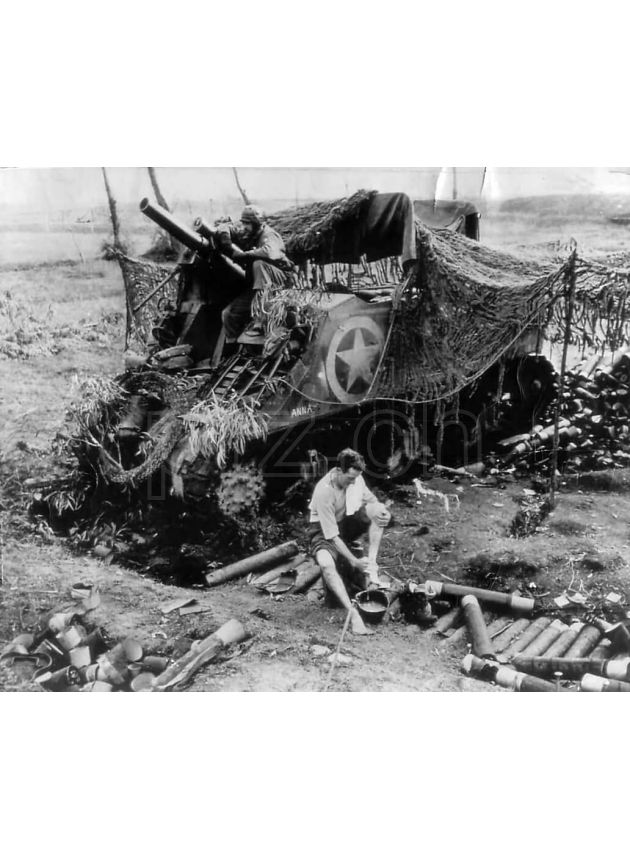
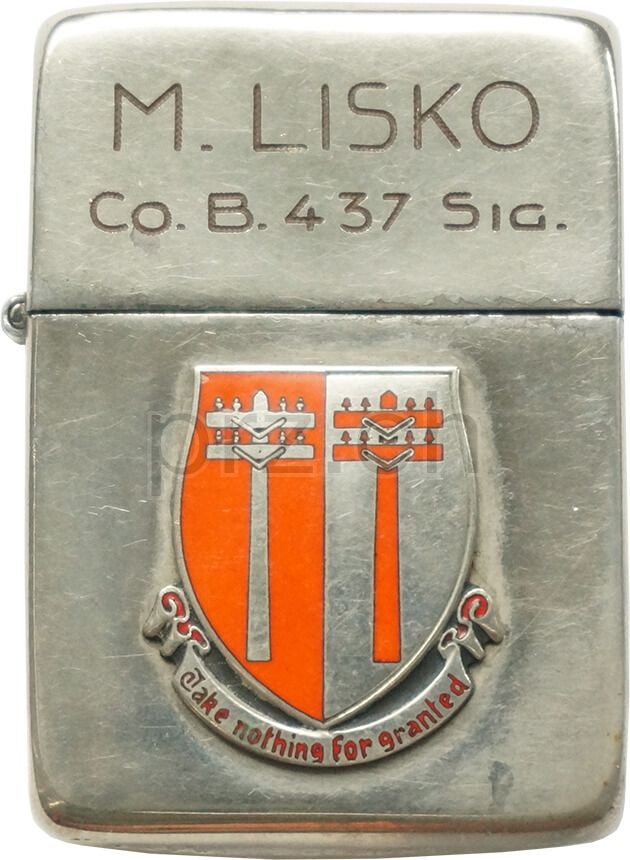
The 437th Signal Battalion has its origins in the U.S. Army Signal Corps, a vital branch responsible for establishing and maintaining communications on the battlefield. During WWII era, Signal units were essential for coordinating troop movements, intelligence gathering, and secure lines of command. Company B of the 437th Signal Battalion was tasked with providing reliable field communications, often operating under combat conditions to set up telephone lines, radio relay stations, and teletype networks. Their work ensured that higher command could direct combat operations effectively across dispersed forces.
Chrome-plated Zippo lighter personalized with the inscription «M. Lisko» and «Co. B. 437 Sig.» on the lid. The front displays the distinctive Signal Corps insignia in red and silver with twin signal poles and the unit motto «Take nothing for granted».
three barrel hinge, round bottom
1943 - 45
in collection
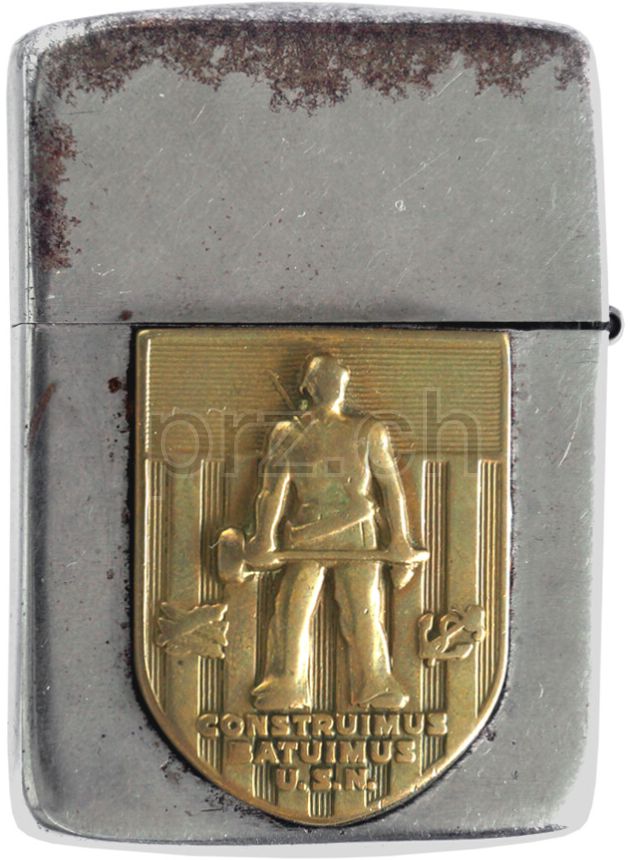
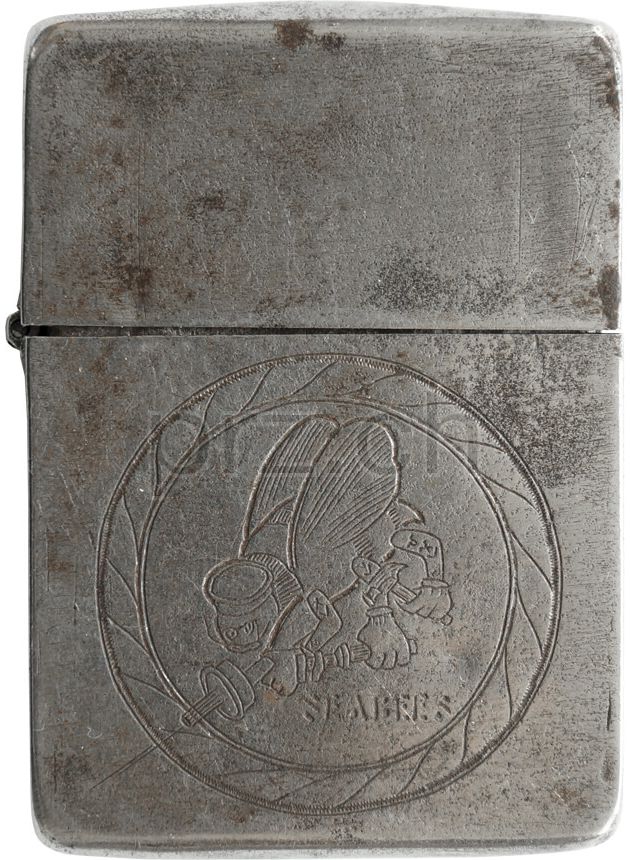
U.S. Naval Construction Battalions, better known as the Navy Seabees, form the U.S. Naval Construction Force. The Seabees nickname is a heterograph of the first letters «C B» from the words Construction Battalion.
Worn chrome plated Zippo with U.S. Naval Construction Force insignia on the front. The Seabees had a second Logo. It was of a shirtless constructionman holding a sledge hammer with a rifle strapped across his back standing upon the words «Construimus Batuimus USN» («We build, We fight» USN).
three barrel hinge, round bottom
1943 - 45
in collection
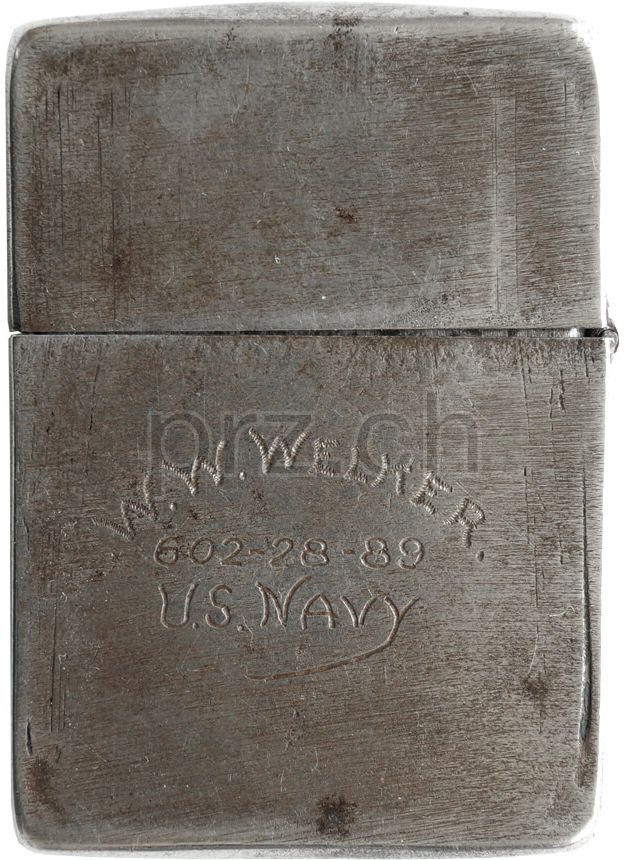
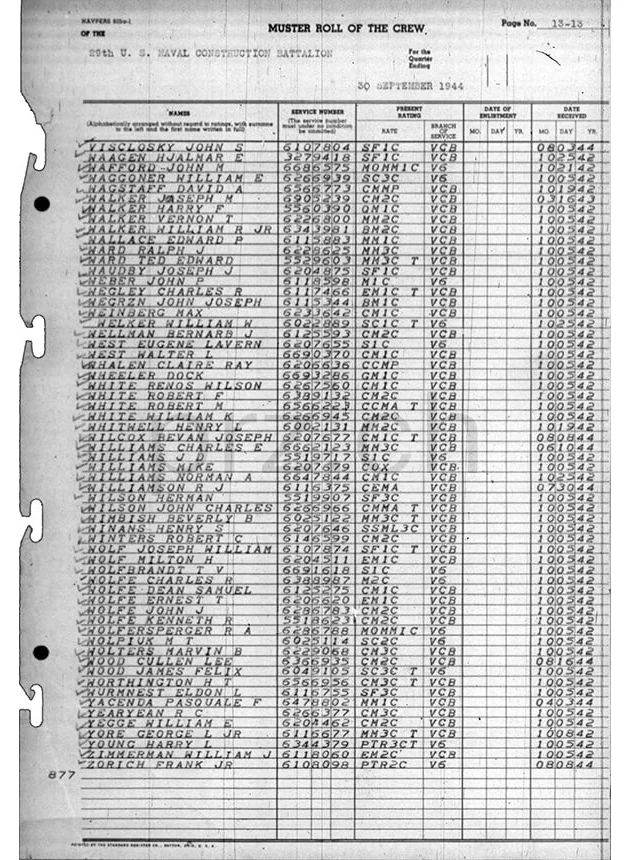
This Zippo belonged to Wiam William W. Welker (6022889), who served in the U.S. Navy from May 1942 to May 1946 with the 29th Naval Construction Battalion (Seabees). Formed after Pearl Harbor, the Seabees were a specialized military construction force responsible for building bases, roads, warehouses, and other vital infrastructure in support of Allied operations. The 29th Construction Battalion served in Northern Ireland, Scotland, and later southwest England, where it helped construct facilities supporting the Allied invasion of Europe. Among its major projects were naval supply installations in the Exeter area, an important logistical center before and after D-Day.
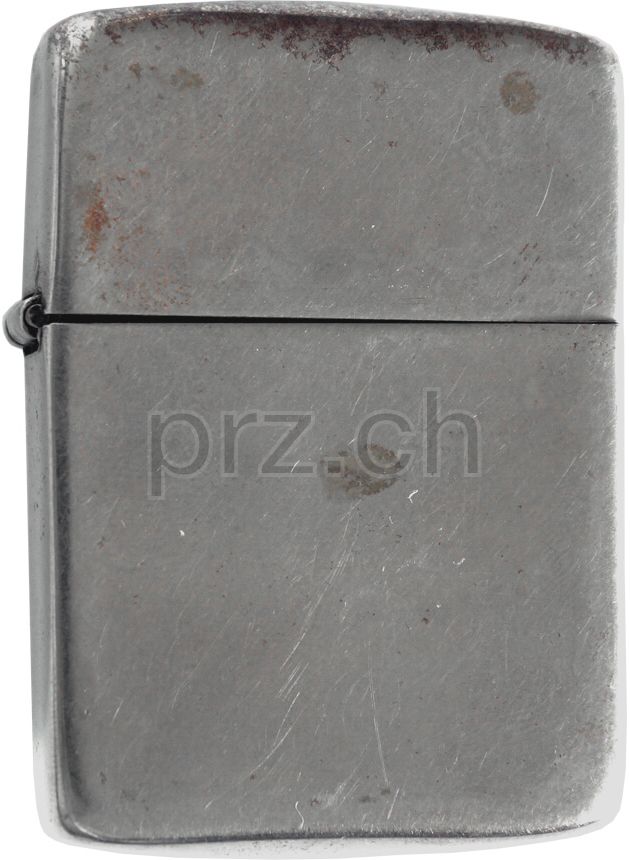
Well worn black crackle Zippo with Seabees logo engraved on the front and ownership details «W. W. Welker, 602 28 89, U.S. Navy» on the other side.
four barrel hinge, flat bottom
1942 - 43
in collection
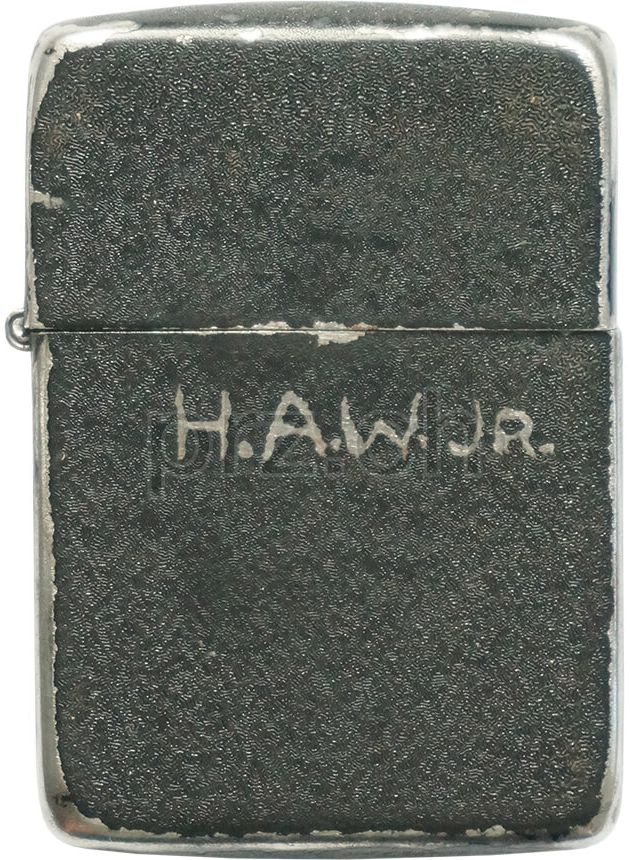
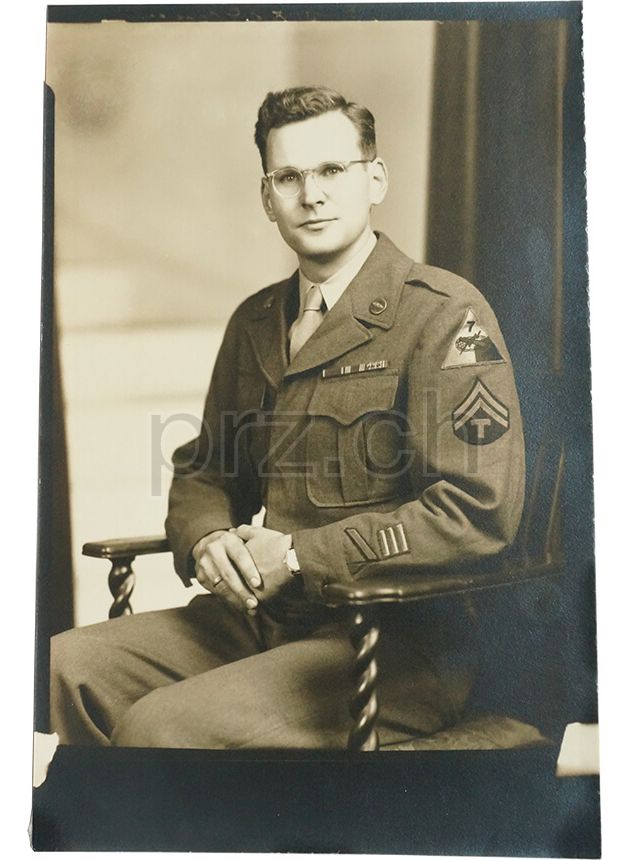
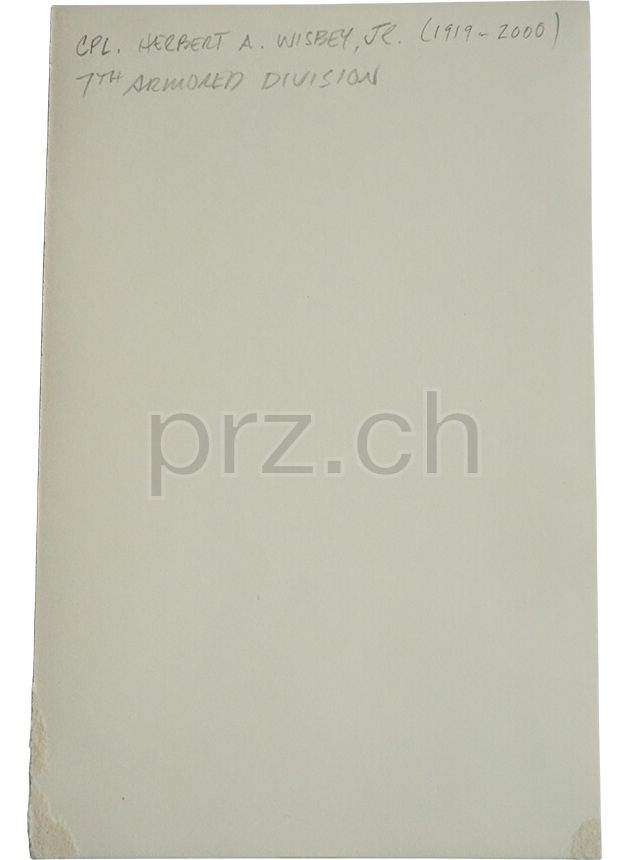
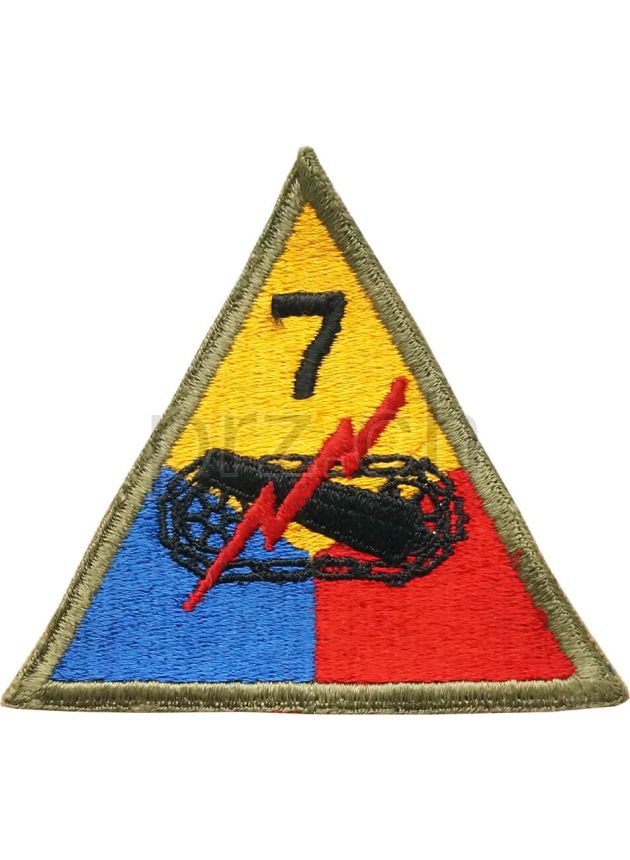
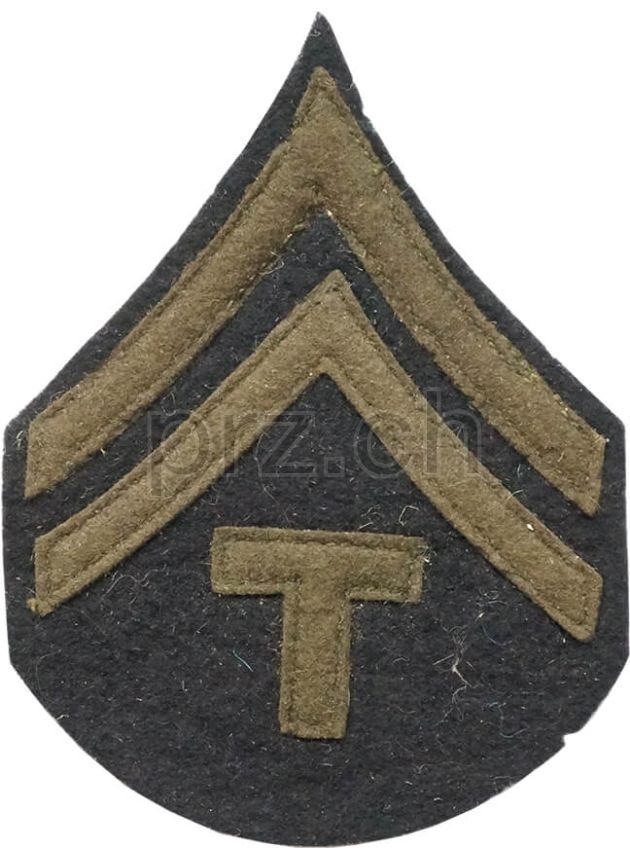
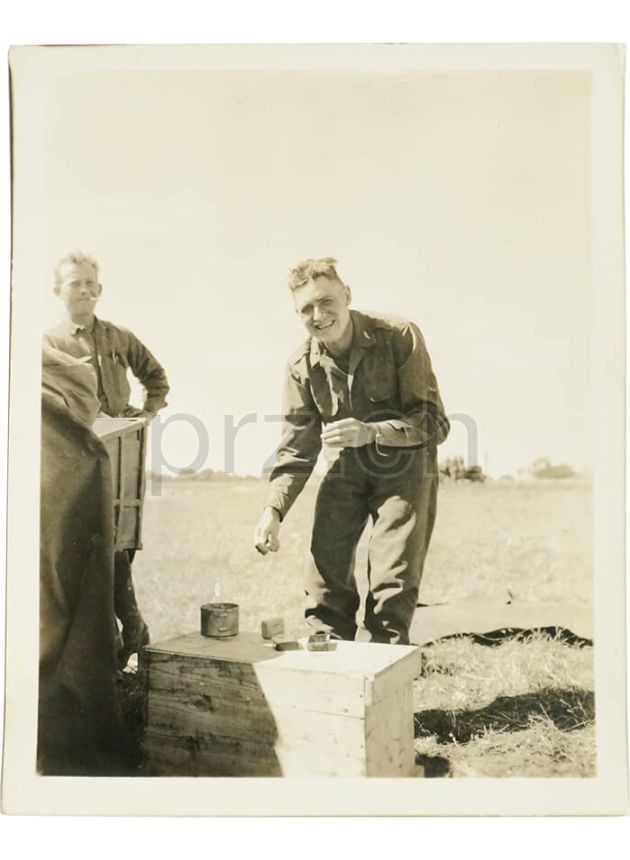
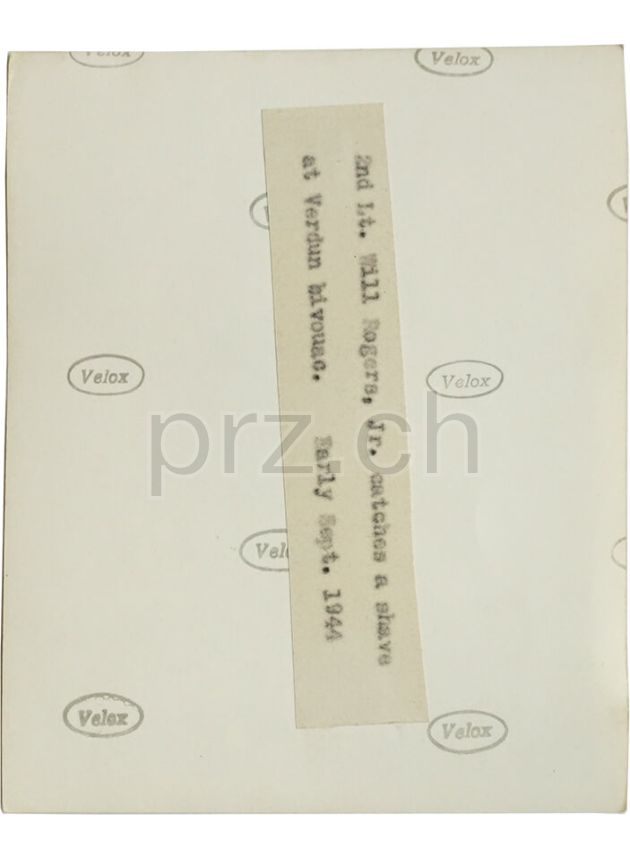
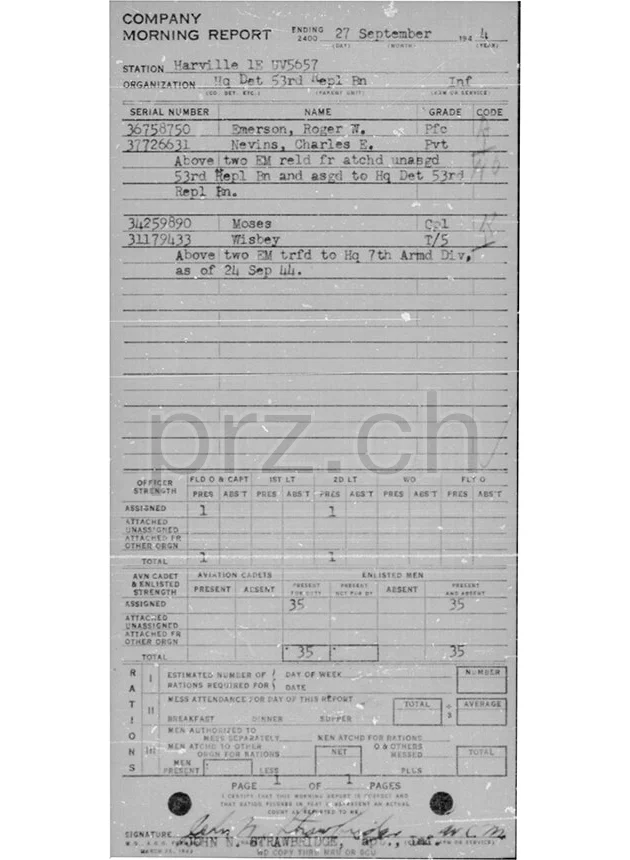
Herbert A. Wisbey, Jr. (31179433) was drafted into the U.S. Army during WWII and initially served as a clerk processing soldiers for overseas deployment. After service in England and crossing Utah Beach shortly after D-Day, he was transferred on 24 September 1944 to Headquarters, 7th Armored Division, where he served as a historian until the end of the war. Assigned to Division Headquarters, Wisbey prepared press releases, after-action reports and other official documents, helping to record the combat history of the famous «Lucky Seventh» during its campaigns across France, Belgium, the Netherlands and Germany.
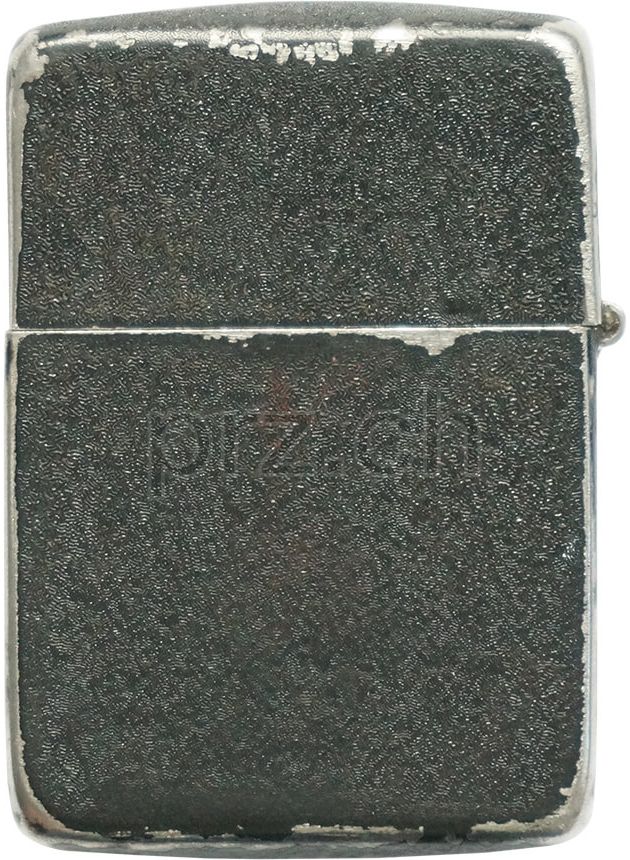
Black crackle Zippo engraved with the initials «H.A.W. JR.», belonging to Herbert A. Wisbey, Jr. I kindly received the other personal items from his family as a memento.
three barrel hinge, round bottom
1943 - 45
in collection
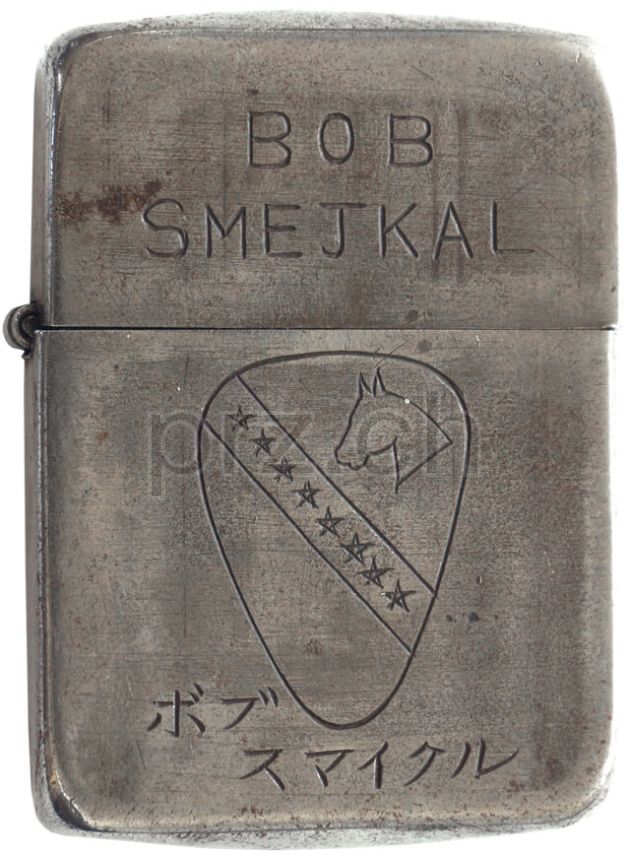
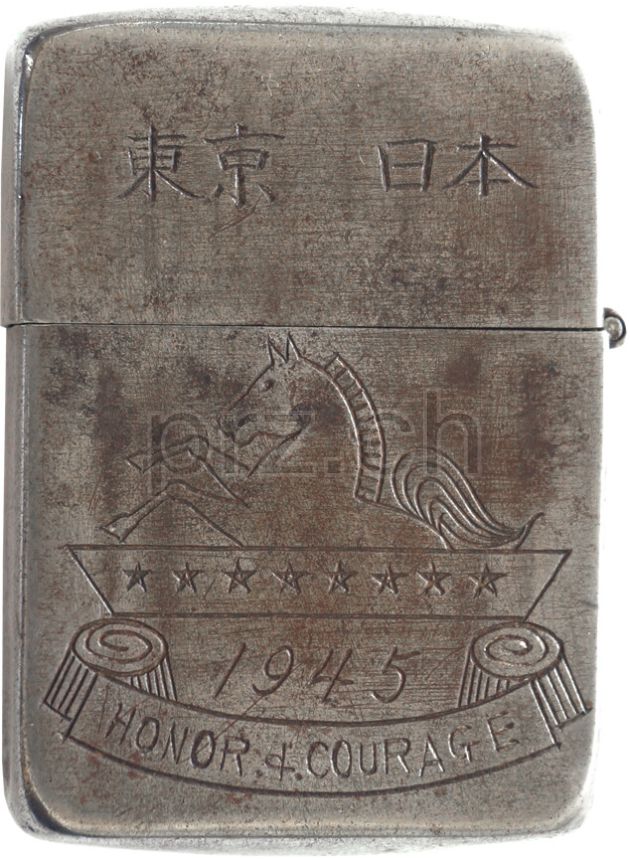
The U.S. 1st Cavalry Division started activities in New Guinea 1944 and after different battles the division took part in the invasion of Leyte. Later, the division invaded Luzon and fought its way as a «flying column» to Manila by 3 February 1945. After the surrender of the Japanese, the 1st Division was given responsibility for occupying the entire city of Tokyo and the U.S. 8th Cavalry Regiment occupied the 3rd Imperial Guard Regiment Barracks in Tokyo, which provided greater proximity to security missions at the American and Russian Embassies and the Imperial Palace grounds.
Well worn black crackle Zippo with different engravings: The insignia of the U.S. 1st Cavalry Division with 8 stars and the owner's name «Bob Smetkal» in original and Japanese characters on the front and the insignia of the U.S. 8th Cavalry Regiment with «1945» and Tokyo in Japanese characters on the other side.
three barrel hinge, round bottom
1943 - 45
in collection
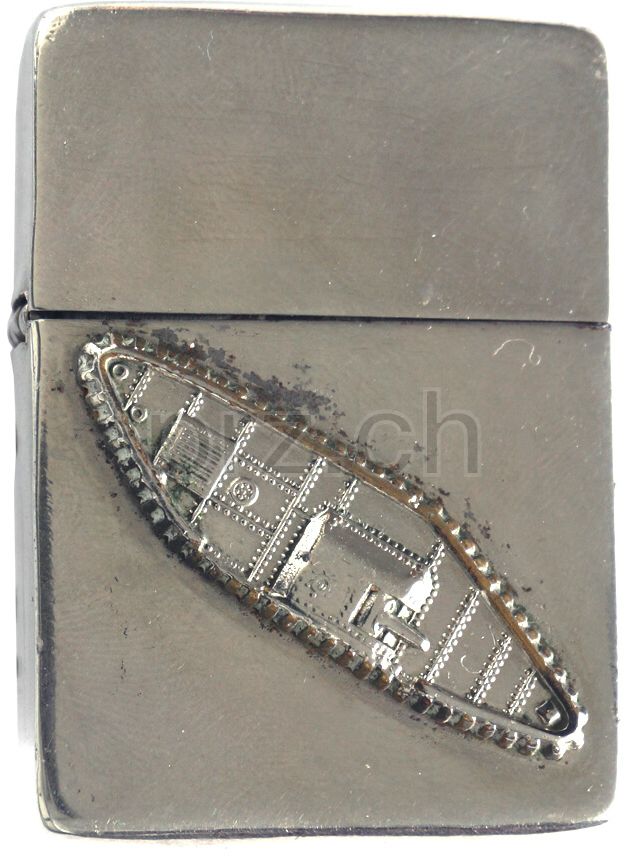
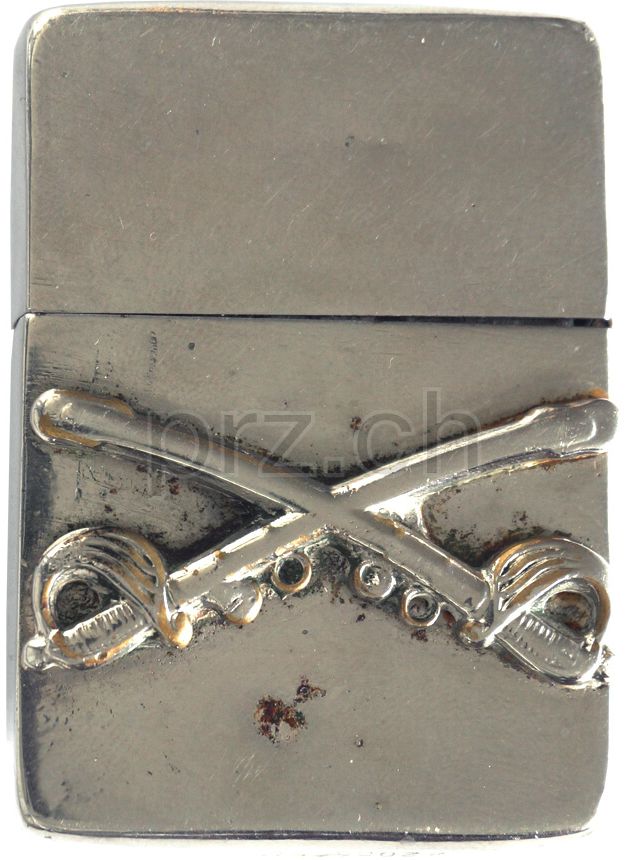
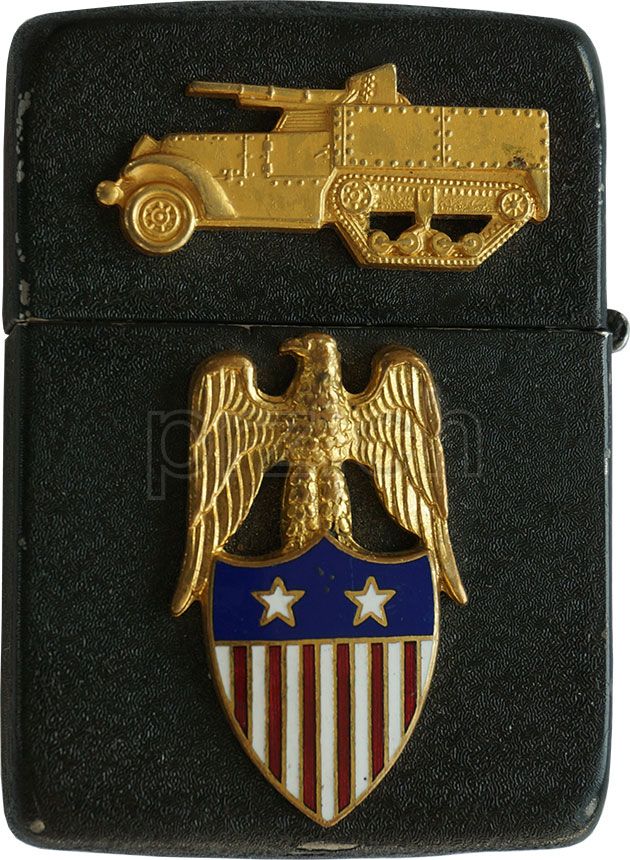
During the war, many of the Army's Cavalry units were mechanized with tanks, which were an important weapons system in WWII.
Chrome plated Zippo with a U.S. Cavalry insignia on one side and a U.S. Armored Force Branch insignia on the other side.
four barrel hinge, round bottom
1942 - 43
in collection
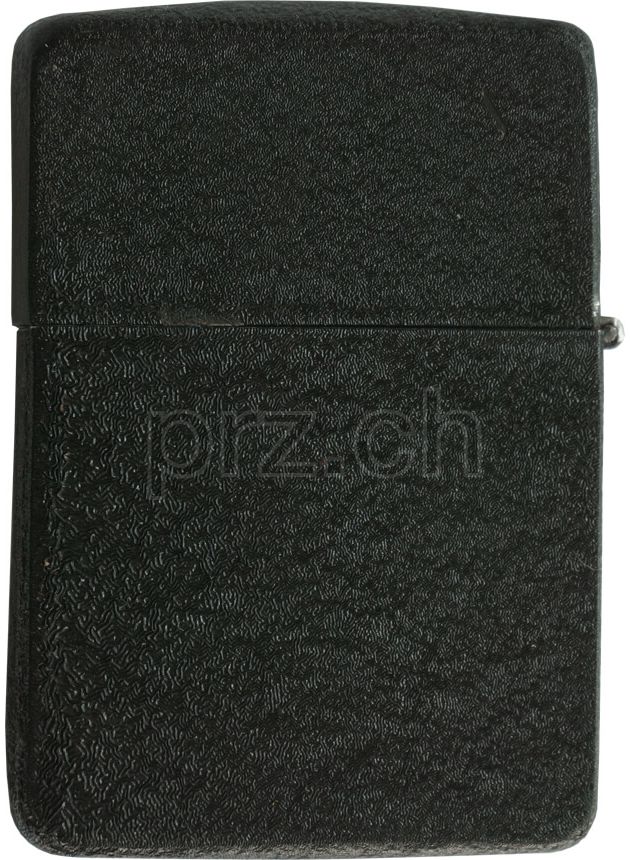
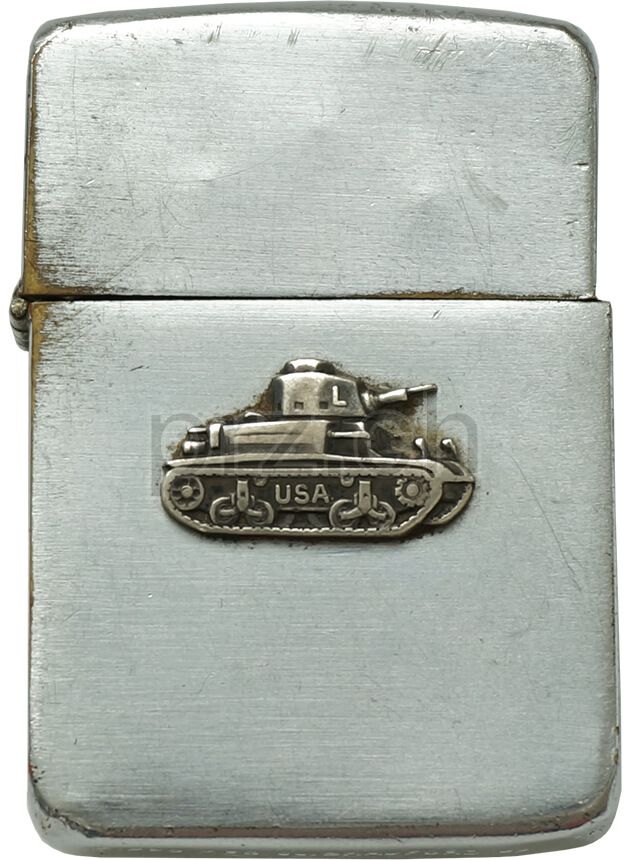
The M2A4 light tank was a variant of the M2 series developed by the United States before World War II. It featured a 37mm gun and several machine guns but had light armor, designed for mobility. During the Guadalcanal Campaign in 1942, the U.S. Marines used M2A4 tanks to support infantry in the dense jungle and played a key role in early U.S. operations in the Pacific before being replaced by the M3 Stuart.
Chrome plated Zippo with a miniature metal M2A4 light tank applied on the front.
four barrel hinge, flat bottom
1937 - 41
in collection
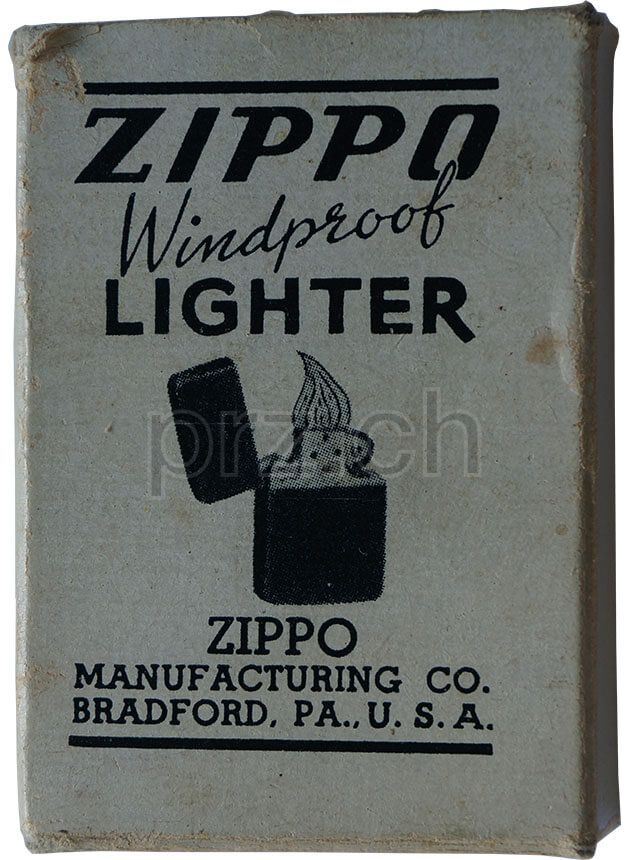
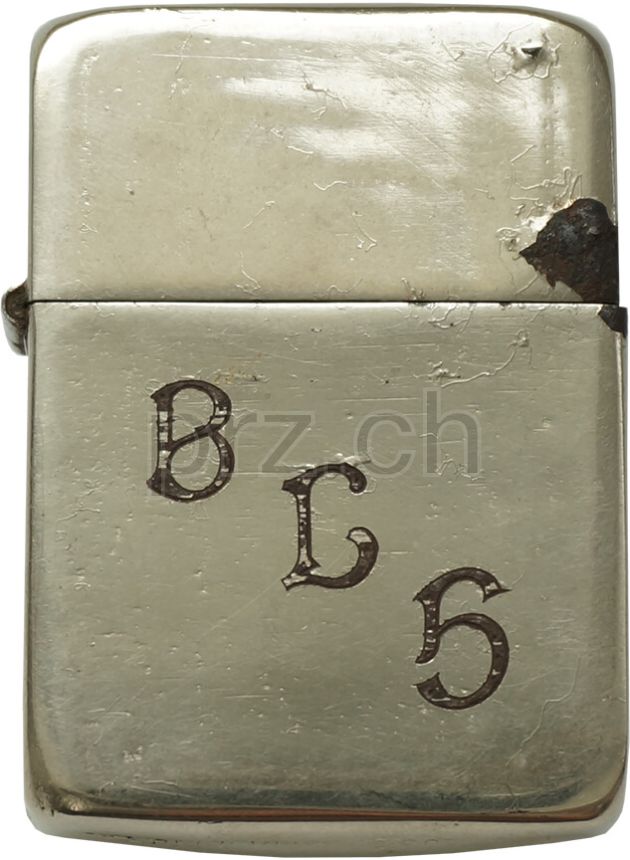
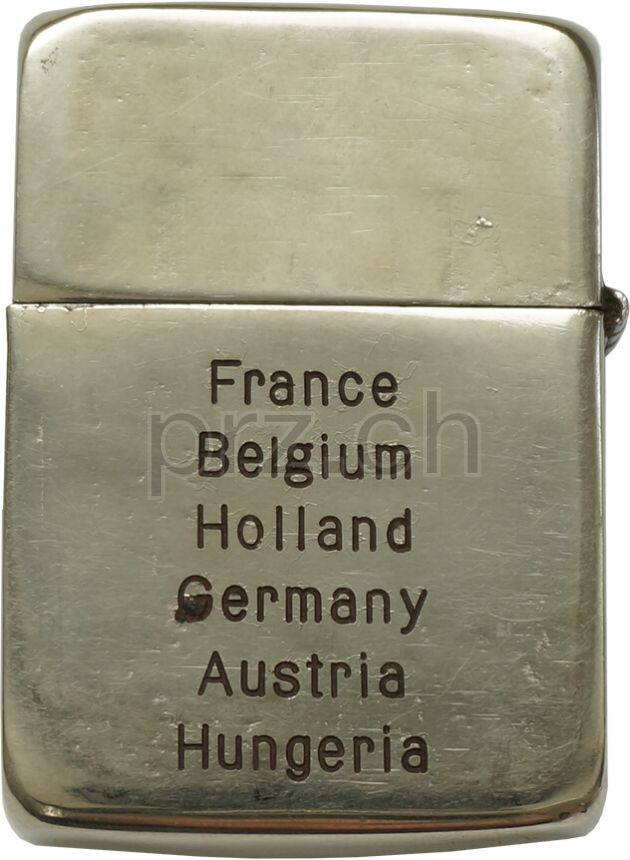
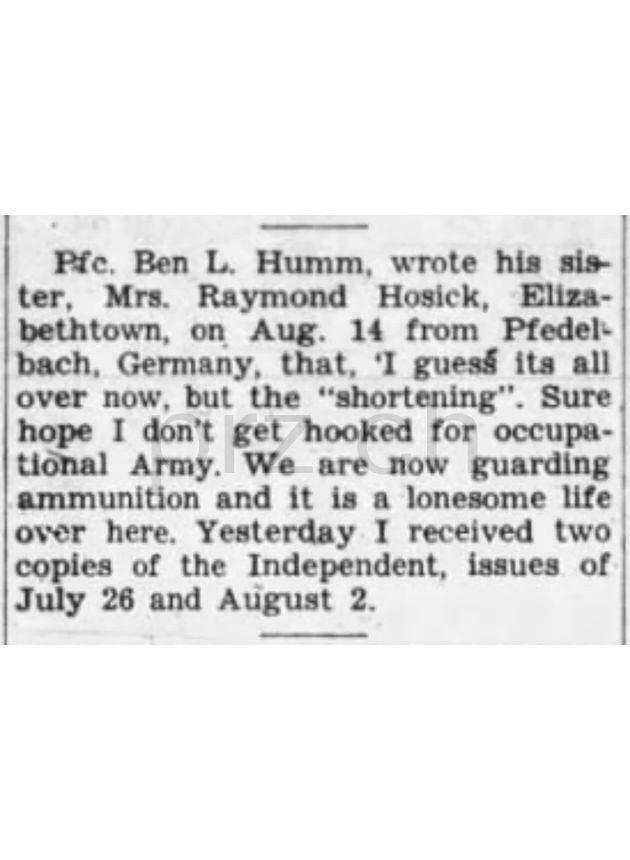
Benjamin Lowder Humm (333124463) of Rosiclare, Illinois, served as a Private First Class in the 68th Armored Field Artillery Battalion of the 1st Armored Division, the famous «Old Ironsides». The 1st Armored Division played a critical role in major campaigns, starting in North Africa and Italy and continuing through France, Belgium, Holland, and Germany during the Allied advance in 1944–1945. After intense fighting in Italy, the division moved into Western Europe, contributing to the liberation of Nazi-occupied territories, including Belgium and Holland, and advancing into Germany. The inclusion of Austria and Hungary reflects the division's involvement in the final stages of the war and post-war occupation in Central Europe. Units like the 68th AFA provided vital artillery support, enabling mechanized operations and the steady progression of Allied forces into Axis-held regions.
Chrome plated Zippo that belonged to Private First Class Benjamin Lowder Humm from Rosiclare, IL, who served in the 68th Armored Field Artillery of the 1st Armored Division. Engraved with his initials “B L H” on the front and the places where he served during the war «France», «Belgium», «Holland», «Germany», «Austria» and «Hungeria» on the back side.
three barrel hinge, round bottom
1943 - 45
in collection
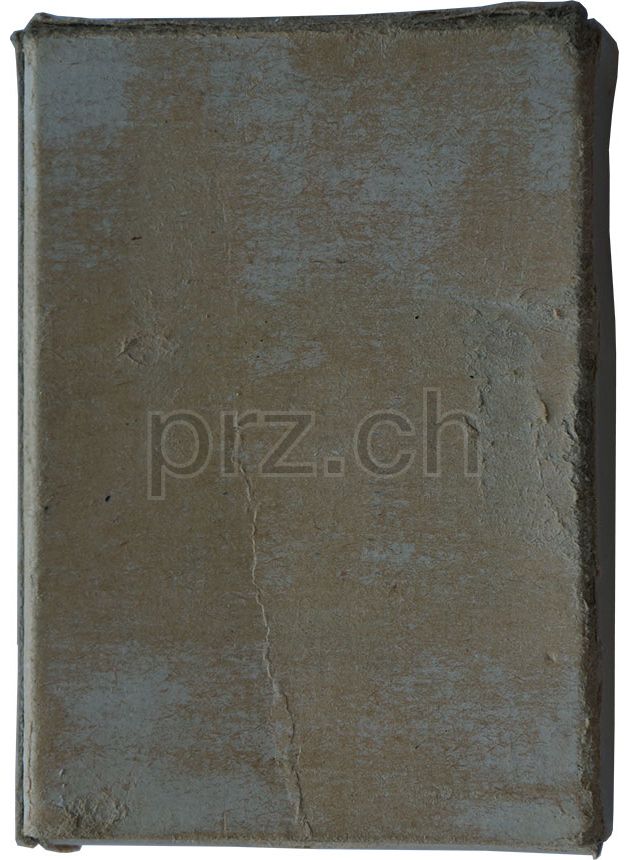
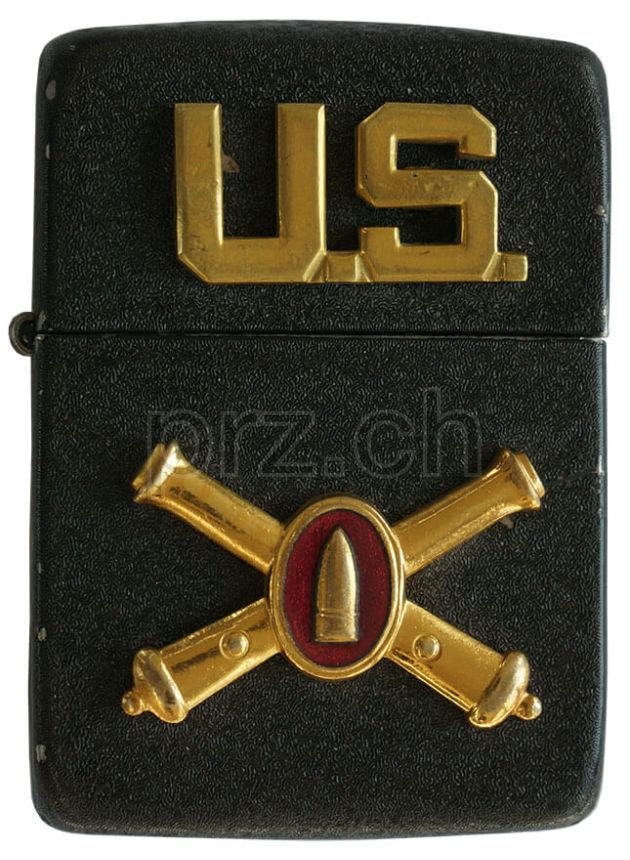
Mint black crackle Zippo with an U.S. Army Aide-De-Camp insignia for an aide serving a major general and a WWII U.S. Army Tank Destroyer officer collar insignia on the front and with a U.S. Army Coast Artillery Corps insignia and U.S. Army officer collar insignia on the other side.
three barrel hinge, round bottom
1943 - 45
in collection
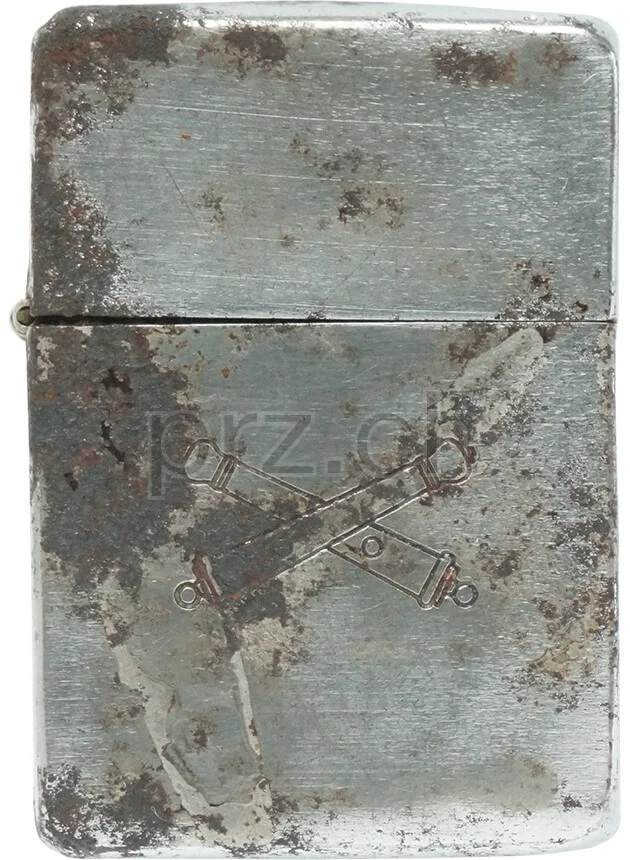
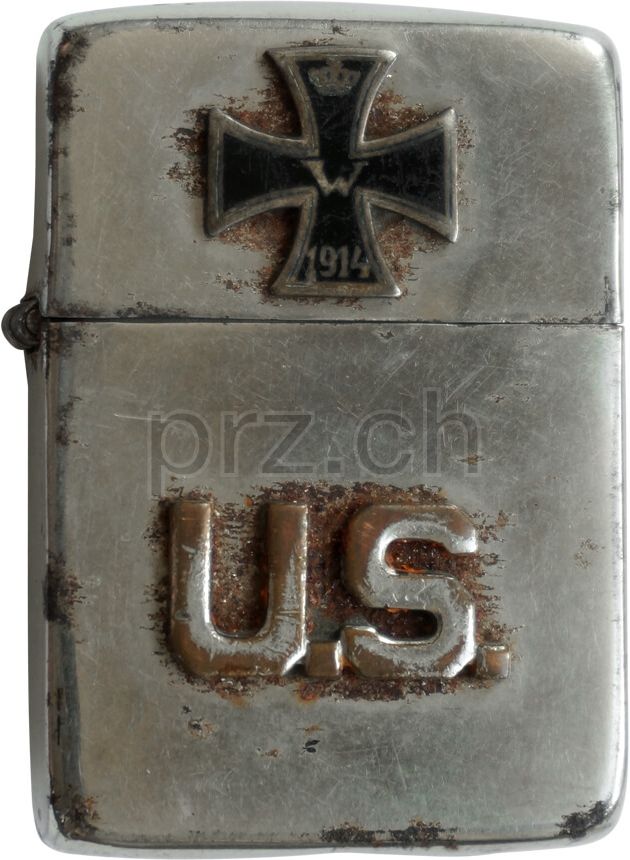
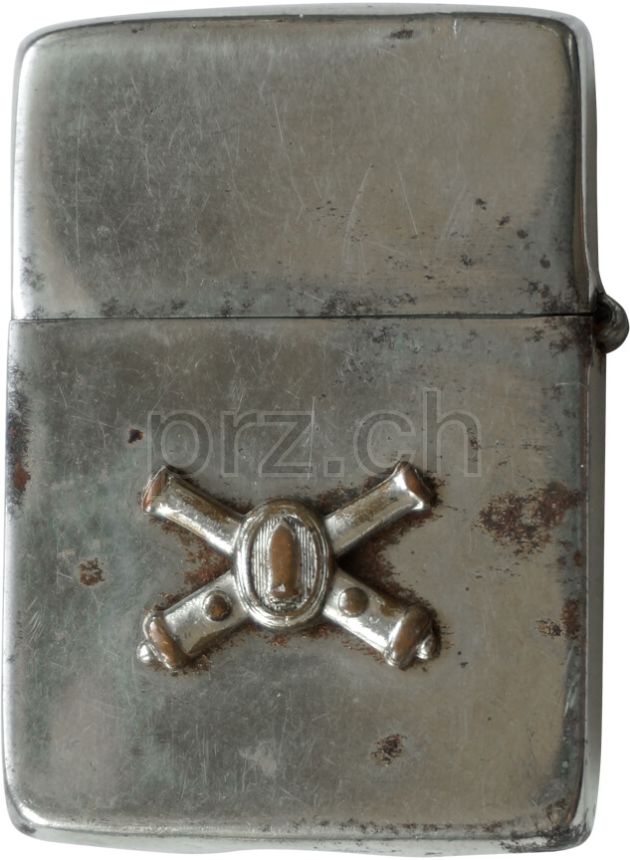
Well worn chrome plated Zippo with U.S. Army Coast Artillery Corps insignia and a German iron cross medal as a trophy of the U.S. G.I. who owned this lighter and fought against the Nazis.
three barrel hinge, round bottom
1943 - 45
in collection
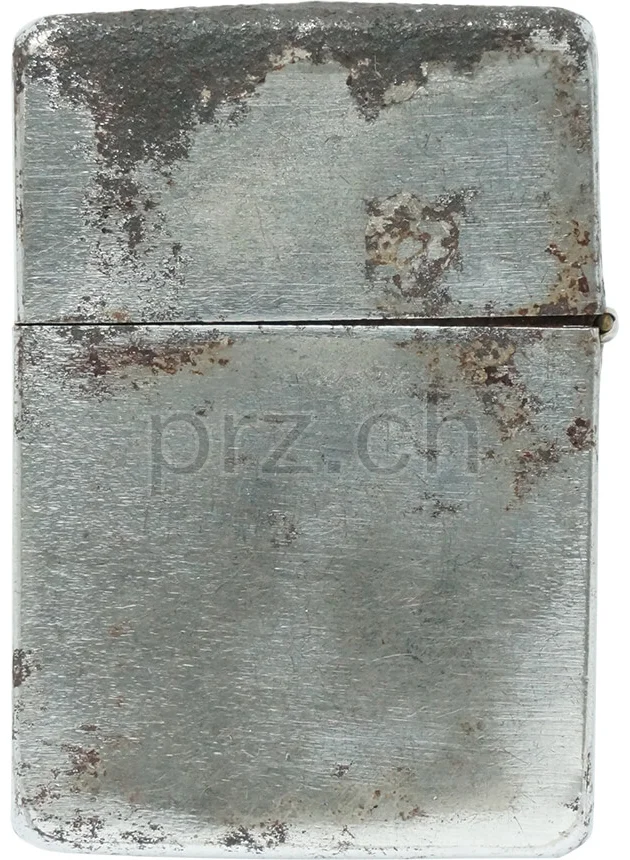
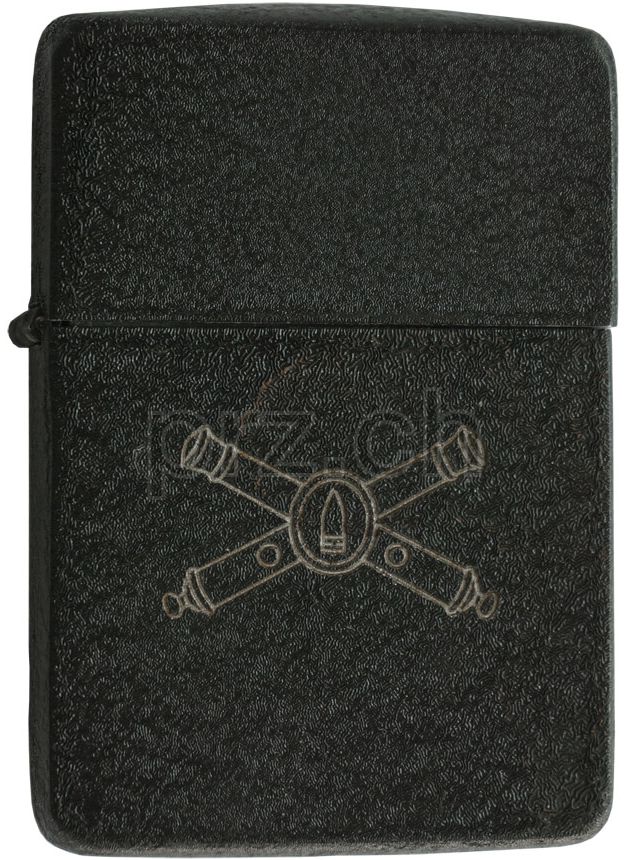
During WWII, the U.S. Army Coast Artillery Corps was responsible for defending vital harbors, coastal fortifications, and strategic bases. Using heavy coastal guns, anti-aircraft artillery, and controlled minefields, its units protected the United States and key overseas installations from enemy naval and air attack.
Mint black crackle Zippo with original factory engraving of the U.S. Army Coast Artillery Corps insignia.
four barrel hinge, flat bottom
1942 - 43
in collection
During WWII, U.S. Army Field Artillery reached the peak of its effectiveness. Highly mobile units used advanced fire direction, rapid communication, and precise target acquisition to deliver coordinated and massed fire support, playing a decisive role in supporting infantry and armored operations across Europe and the Pacific.
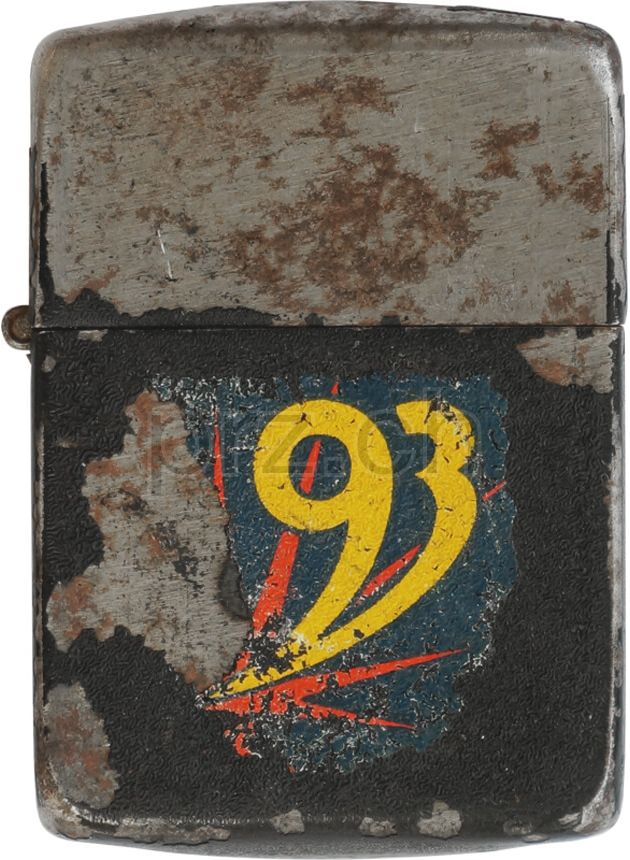
Well worn black crackle Zippo with original factory engraving of the U.S. Army Field Artillery Branch insignia.
four barrel hinge, flat bottom
1942 - 43
in collection
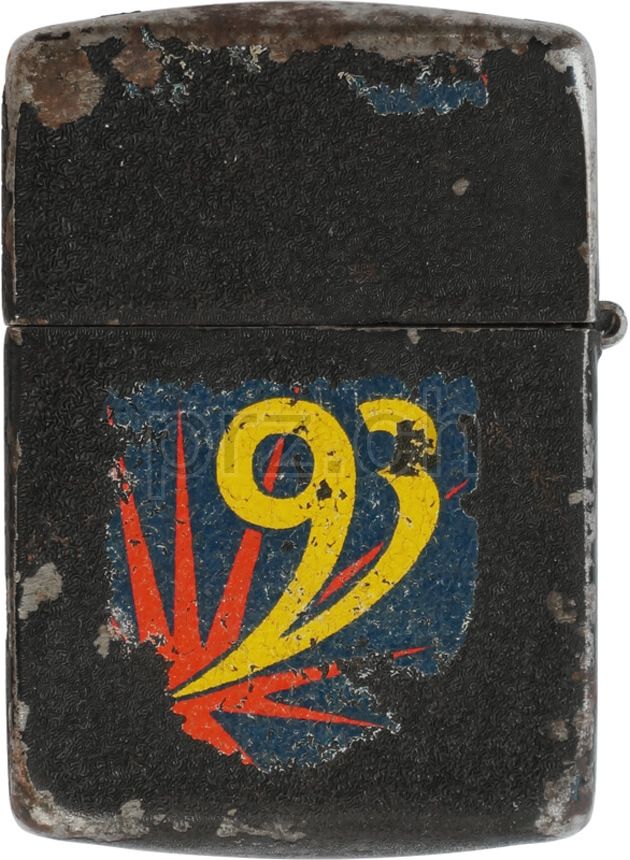
The U.S. 93rd Chemical Mortar Battalion was an Army unit attached to U.S. Infantry Divisions during WWII. They were armed with 4.2 inch (107 mm) chemical mortars. Chemical mortars are so named because of their capability of firing not only high explosive, but also chemical, gas, incendiary and smoke marker shells. These mortars came to be acknowledged by U.S. Army commanders and GI's as being one of the most effective means of quickly striking at stationary targets, such as machine gunnests, prepared strongpoints, pillboxes and even German artillery positions.
Black crackle with painted U.S. 93rd Chemical Mortar Battalion insignia.
three barrel hinge, round bottom
1943 - 45
in collection
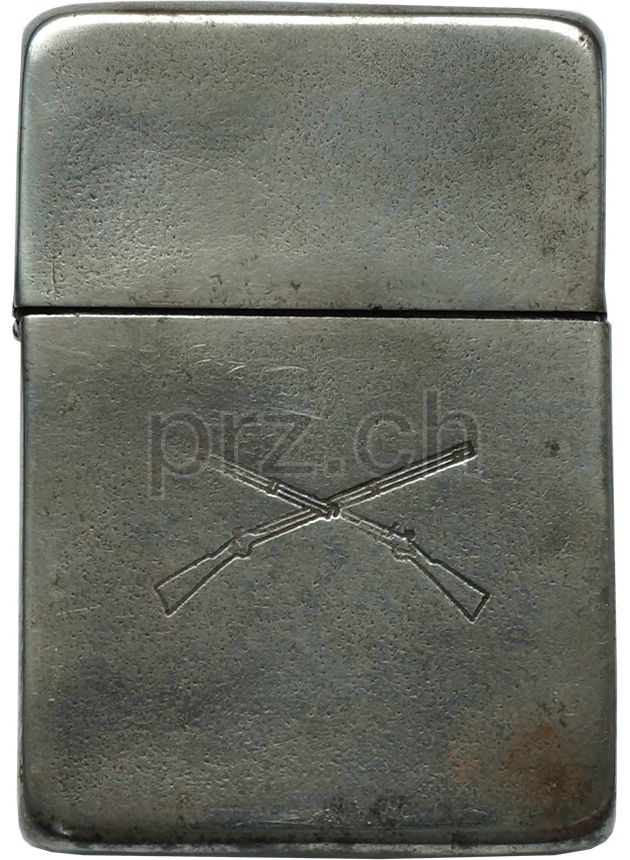
Well worn Zippo with original engraved U.S. Infantry insignia.
four barrel hinge, flat bottom
1942 – 43
in collection
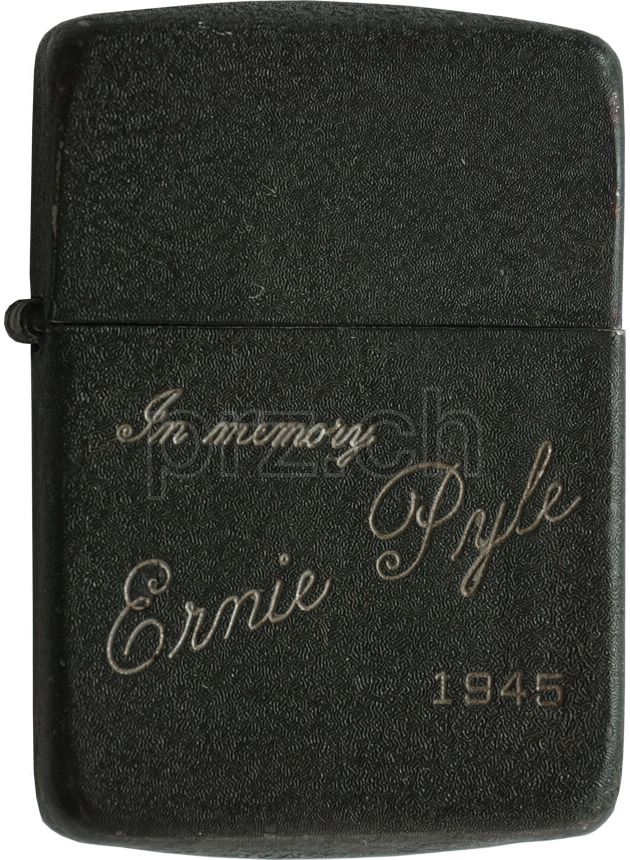
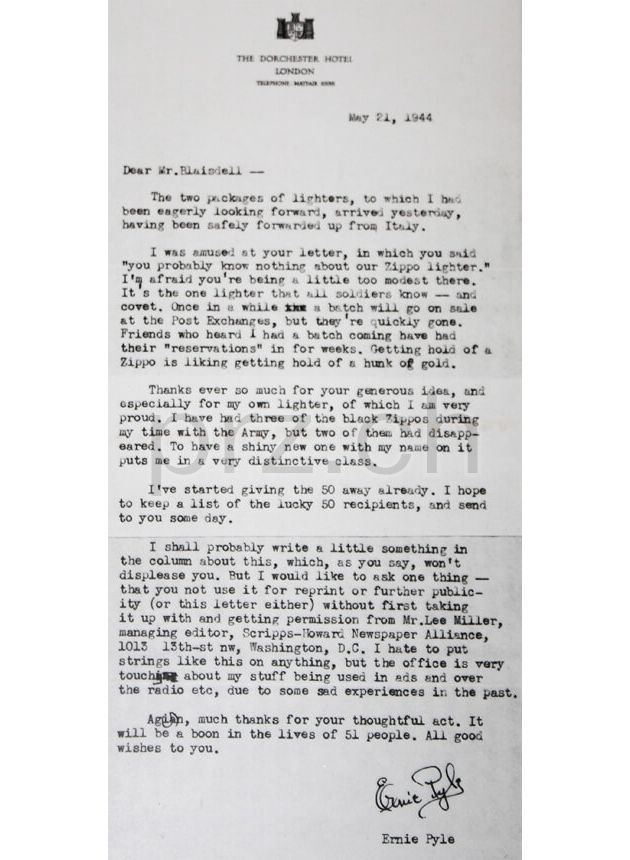
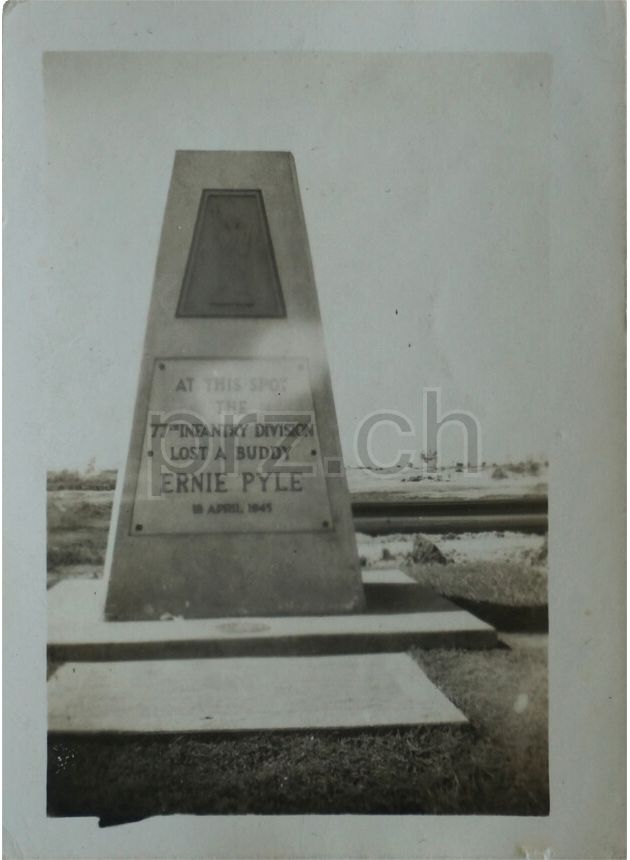
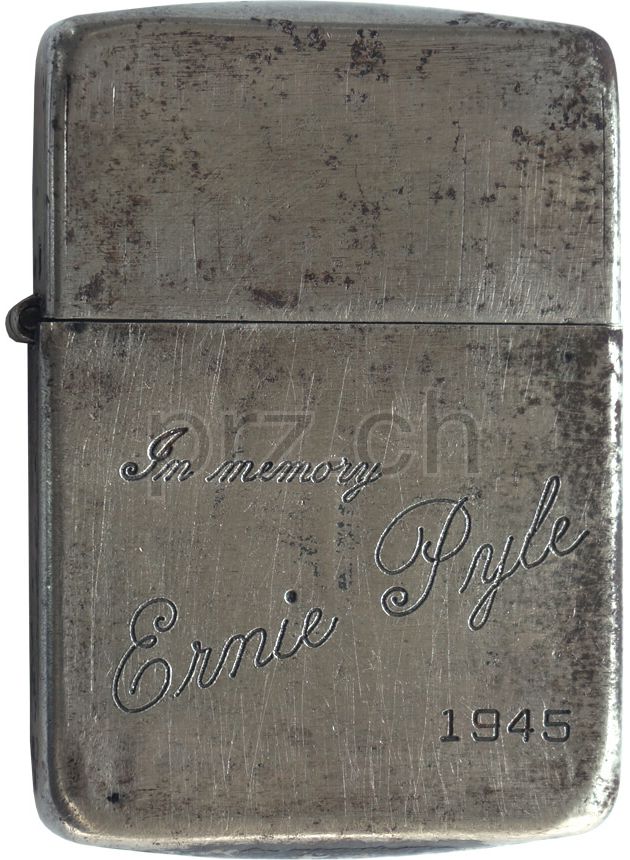
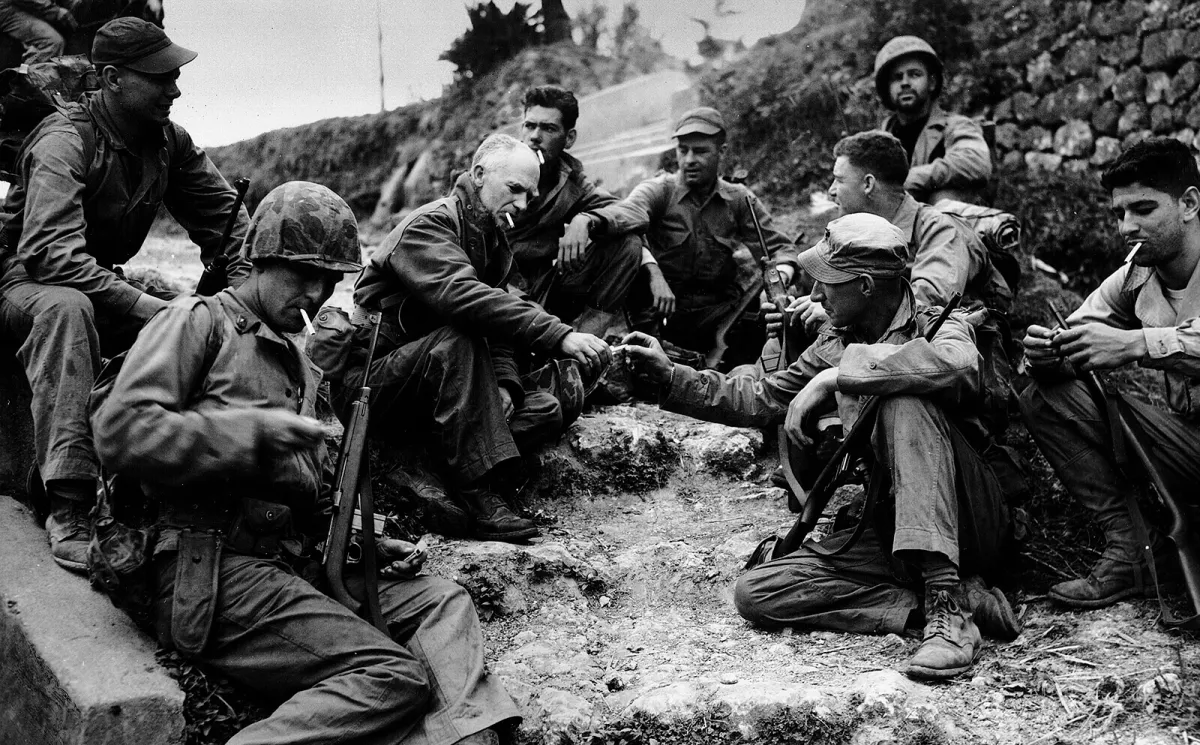
Ernie Pyle was one of the most honored American journalists of WWII. He reported from the front lines in North Africa, Europe, and the Pacific. Beloved for his vivid, human portrayals of the common soldier’s experience, he earned the Pulitzer Prize in 1944. On April 18, 1945, during the Battle of Okinawa, he was killed by Japanese machine-gun fire on Ie Shima, a small island off Okinawa’s coast. His death was mourned across the Allied world, and his name became indelibly linked with the sacrifice and endurance of the American G.I. There is a monument dedicated to his memory on the southern part of the island.
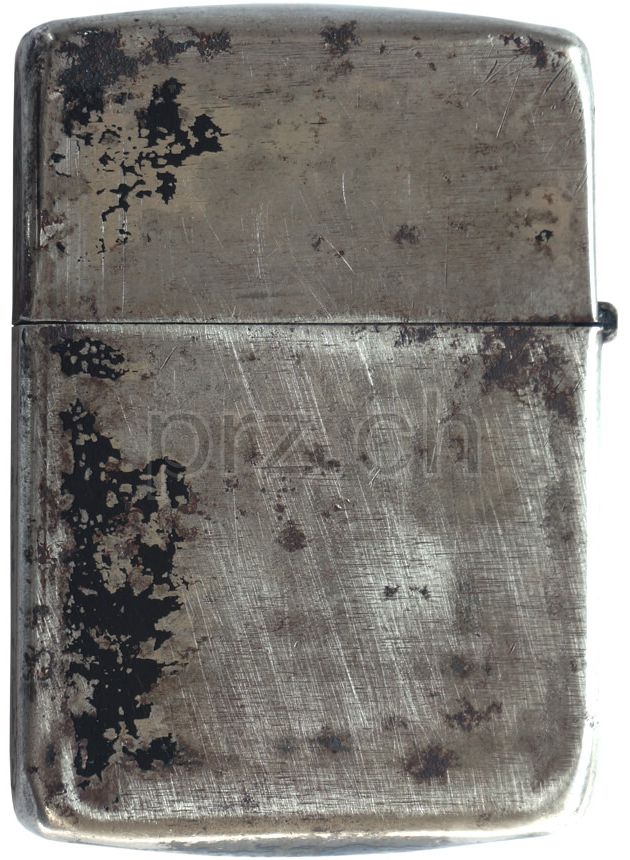
«In memory Ernie Pyle 1945» is engraved on the front of this black crackle Zippo in mint condition.
three barrel hinge, round bottom
1943 - 45
in collection
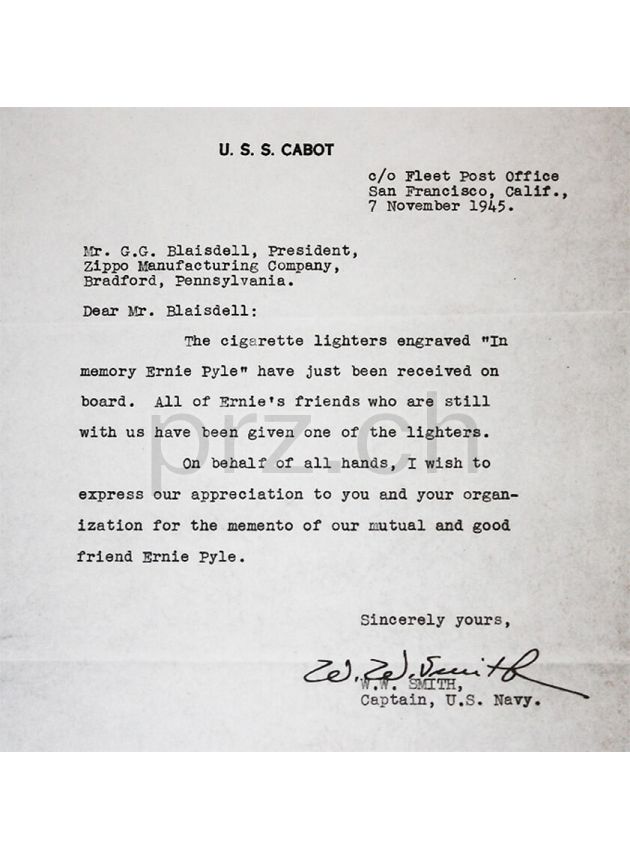
George Blaisdell, who had an intense and mutually appreciative correspondence with Ernie Pyle during the war, had this unique Zippo engraved as a token of great appreciation and in memory of him. Only some hundred pieces were manufactured and given to the crew of the U.S.S. Cabot.
«In memory Ernie Pyle 1945» is engraved on the front of this Zippo in used condition.
three barrel hinge, round bottom
1943 - 45
sold
Well worn chrome plated Zippo with U.S. Infantry insignia and a cartridge cal .38 super on the front.
Untouched, in original return box dated January 24, 1969 after repair by Zippo with a spare fluid tube and packet of flints.
five barrel hinge (fixed after war), flat bottom
1942 - 43
in collection
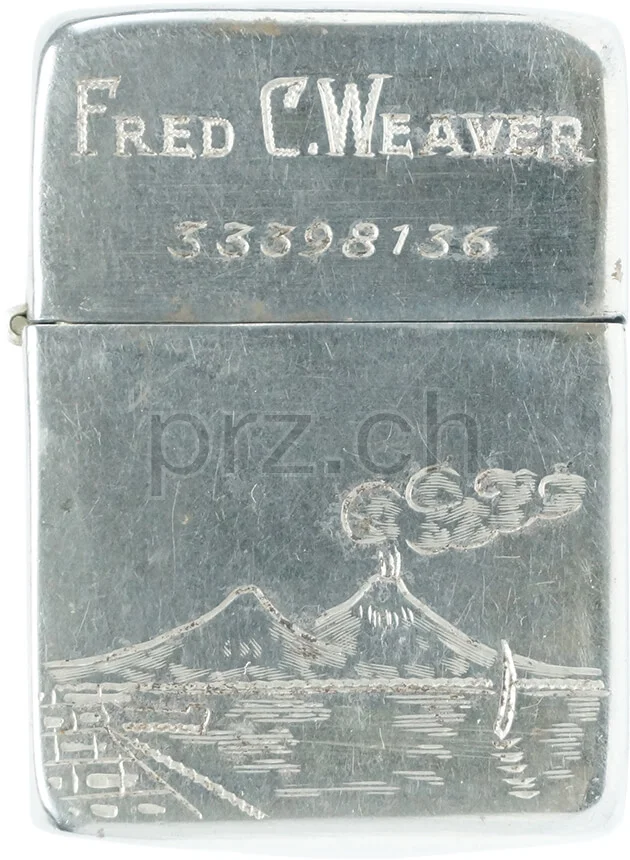
The 3rd Infantry Division, known by its historic nickname «Rock of the Marne» fought extensively in the Mediterranean and European theaters from 1943 to 1945, participating in the landings at Anzio, advancing through Rome and Florence during the Italian campaign, and later taking part in Operation Dragoon, landing in southern France near Toulon in August 1944. Continuing the advance into Germany, the division engaged enemy forces along the Siegfried Line and ultimately advanced toward the Alpine region and the Brenner Pass in the final phase of the war.
Nickel plated Zippo engraved with campaign locations including «Rome», «Florence», «Anzio», «Brenner Pass», «Toulon», «Siegfried Line», «So. France», and «1943–45». The reverse is engraved «Martha & Gene».
four barrel hinge, round bottom
1942 - 43
in collection